
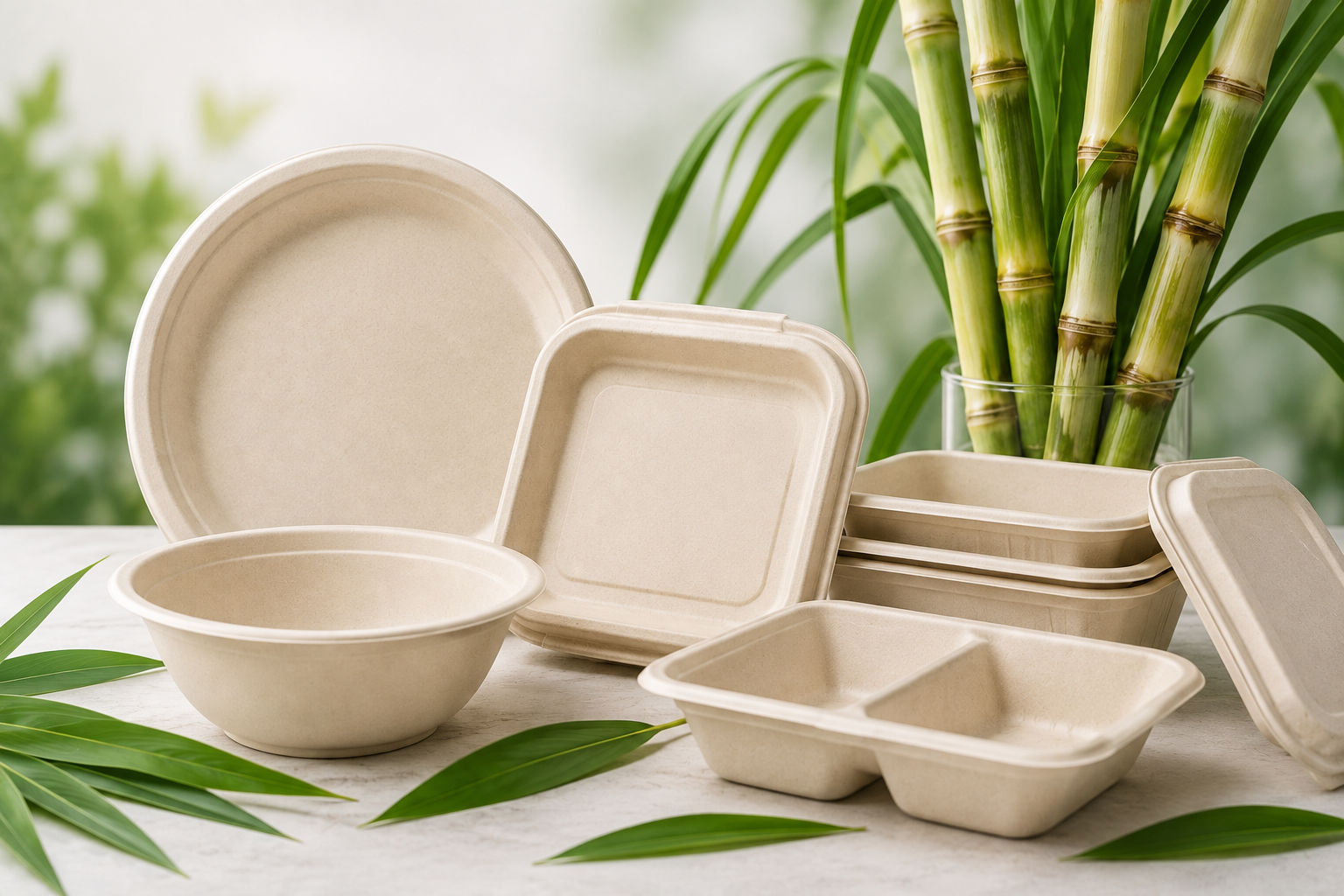
The way people eat, order food, and enjoy events is changing rapidly. Restaurants, cafés, hotels, caterers, food-delivery companies, and event organizers are looking for tableware that offers convenience while also supporting more responsible business practices. This growing demand has increased interest in Sugarcane Bagasse Tableware, a plant-fiber-based option designed for modern food-service applications.
Sugarcane bagasse is obtained from the fibrous material remaining after sugarcane is processed. Instead of leaving this agricultural residue without a useful application, it can be processed into molded food-service products such as plates, bowls, trays, and containers. This creates an opportunity to use a renewable agricultural resource for practical everyday products.
For businesses, selecting the right tableware is about more than appearance. Product strength, food compatibility, size, convenience, storage, presentation, and supply availability all matter. At the same time, customers are becoming more interested in products that align with environmentally conscious lifestyles.
What Makes Sugarcane Bagasse Tableware Different?
Traditional disposable food-service products have commonly been manufactured from materials such as plastic or foam. Sugarcane Bagasse Tableware provides another material option by using plant fibers obtained from sugarcane processing.
The fibers can be cleaned, processed, formed, and molded into different shapes. Depending on the manufacturing process and product specifications, the finished products can be designed for a variety of food-service requirements.
This makes Sugarcane Bagasse Tableware suitable for businesses that need disposable or single-use food-service products while looking for alternatives based on renewable plant material.
The versatility of Sugarcane Bagasse Tableware also allows manufacturers to create different sizes and shapes. Plates can be designed for meals and snacks, bowls can be used for salads or other dishes, and trays or containers can support takeaway and catering requirements.
The Growing Demand for Sustainable Tableware
Environmental awareness is influencing purchasing decisions across many industries. Food businesses are particularly visible because tableware and packaging are used every day and often in large quantities.
Customers may notice whether a restaurant uses conventional plastic packaging, reusable products, or plant-based alternatives. Businesses therefore have an opportunity to make sustainability part of their overall brand experience.
Sugarcane Bagasse Tableware can become one component of a broader responsible purchasing strategy. Businesses can combine suitable tableware with other efforts such as reducing unnecessary packaging, improving waste management, selecting appropriate quantities, and choosing materials that fit their operational goals.
Sustainability does not have to be complicated. Even small changes in frequently purchased products can contribute to a business’s overall approach to resource management.
Benefits of Sugarcane Bagasse Plates
Plates are among the most commonly used food-service products. Restaurants, caterers, food stalls, event organizers, and hospitality businesses may require large quantities every day.
Sugarcane Bagasse Tableware plates can provide a practical serving surface for different types of food. Depending on the specific design, they may be available in different shapes, sizes, and compartment configurations.
One benefit is their lightweight nature, which can make transportation and handling convenient. They can also provide a clean appearance that works well for casual dining, catering, parties, corporate events, and takeaway services.
For businesses serving different menu items, selecting several plate sizes can help create a more organized serving system.
Benefits of Bagasse Bowls
Bowls are useful for foods that require deeper containers, including salads, snacks, desserts, rice-based dishes, and other prepared foods.
Bagasse bowls offer a plant-fiber-based option for businesses looking to diversify their food-service supplies. They can be used in restaurants, cafés, catering operations, canteens, events, and takeaway services.
When choosing a bowl, businesses should consider diameter, depth, capacity, food type, stacking requirements, and storage space.
The right product can make serving more efficient while maintaining an attractive presentation.
Ideal for Restaurants and Cafés
Restaurants and cafés have different requirements depending on their menu and service model. A dine-in restaurant may use tableware primarily for selected events or takeaway services, while a café may require disposable products throughout the day.
Sugarcane Bagasse Tableware can be incorporated into a variety of food-service environments where plant-fiber-based disposable tableware is appropriate.
For takeaway orders, plates and bowls can help simplify serving and packaging. For promotional events, seasonal menus, outdoor services, and large gatherings, disposable tableware can also reduce the amount of reusable dishwashing required.
Businesses should select products according to their specific food, service, and disposal requirements.
A Useful Option for Catering Businesses
Catering companies often need to serve many people at the same time. Weddings, birthdays, exhibitions, conferences, corporate meetings, festivals, and outdoor events can require hundreds or thousands of plates and bowls.
For these applications, practical tableware can help simplify transportation, distribution, serving, and cleanup.
Sugarcane Bagasse Tableware can be considered for catering operations that want plant-based food-service products. Its lightweight construction can make bulk handling easier, while different product formats can be selected according to the menu.
Caterers should consider the number of guests, meal type, serving style, transportation requirements, storage conditions, and disposal facilities before placing a bulk order.
Applications in Hotels and Hospitality
Hotels and resorts manage many types of food-service activities. Breakfast buffets, conferences, outdoor functions, room-service operations, poolside events, and private celebrations can all have different requirements.
Eco-conscious hospitality businesses may consider plant-fiber tableware for suitable applications. The products can complement a hotel’s broader sustainability initiatives and provide another way to communicate responsible purchasing practices.
A professional appearance is also important in hospitality. Sugarcane Bagasse Tableware should fit the overall presentation of the food and the expectations of guests.
For large hospitality operations, consistent quality and dependable supply are particularly important. Procurement teams should evaluate suppliers based on product specifications, availability, packaging, and service support.
Takeaway and Food Delivery
The takeaway and food-delivery industry has grown significantly, creating greater demand for convenient food packaging and disposable tableware.
Restaurants need products that can accommodate meals while being easy to handle and transport. Customers also expect packaging that keeps food organized and presentable.
Sugarcane Bagasse Tableware products can be used for selected takeaway applications, including plates, bowls, trays, and molded containers.
When choosing food packaging, businesses should consider the food being packed, portion size, moisture, temperature, transportation time, and product specifications. Different products are designed for different applications, so businesses should always verify the manufacturer’s recommended use.
Suitable for Events and Outdoor Gatherings
Outdoor events create unique tableware requirements. There may be limited access to washing facilities, and organizers may need lightweight products that can be distributed quickly.
Community events, picnics, food festivals, exhibitions, corporate gatherings, and private celebrations can all benefit from efficient food-service solutions.
Using Sugarcane Bagasse Tableware at appropriate events can help organizers incorporate plant-based products into their event planning.
Event organizers should also plan disposal facilities in advance. Even environmentally preferable products need proper waste handling to achieve their intended environmental benefits.
Food Presentation Matters
Sustainable tableware should not require businesses to compromise on presentation.
Customers experience food through multiple senses, and visual presentation is an important part of dining. Clean, well-designed plates and bowls can make meals look more appealing.
For food brands, tableware can also become part of the visual identity. A simple and natural-looking product can complement brands that emphasize fresh ingredients, natural products, sustainability, or responsible business practices.
This makes plant-fiber tableware particularly relevant for businesses developing a modern and environmentally conscious customer experience.
How to Select the Right Bagasse Products
Choosing the right tableware requires more than simply selecting the most environmentally friendly material. Businesses should evaluate the complete product specification.
1. Consider the Menu
Think about what foods will be served. Dry foods, sauces, salads, desserts, rice dishes, snacks, and combination meals may require different product formats.
2. Choose the Correct Size
Plate diameter, bowl capacity, and container dimensions should match serving portions. The correct size can improve presentation and reduce unnecessary material use.
3. Evaluate Strength
Consider how the product will be handled from storage to serving. Catering and takeaway operations may require products with suitable rigidity and strength for their specific applications.
4. Check Temperature Requirements
If food will be hot, chilled, frozen, or reheated, verify whether the selected product is designed for that application. Never assume that every bagasse product has identical temperature performance.
5. Consider Storage
Bulk buyers should calculate how much storage space is available. Products that stack efficiently can help businesses manage inventory more effectively.
6. Check Certifications and Food-Contact Information
Commercial buyers should review applicable food-contact certifications, compliance documentation, and manufacturer specifications before making purchasing decisions.
Sugarcane Bagasse Tableware for Businesses
One of the biggest advantages of choosing a Sugarcane Bagasse Tableware supplier is the ability to purchase products according to business requirements.
Restaurants may require regular quantities, while event companies may have seasonal demand. Distributors may need large-volume orders, and hotels may require several product formats.
A supplier should therefore be able to provide clear information about sizes, packaging, quantities, availability, and product specifications.
Businesses should also consider delivery reliability. A shortage of essential tableware can disrupt food-service operations, especially during busy seasons or large events.
Sustainability Beyond Tableware
Although Sugarcane Bagasse Tableware can support a more sustainable purchasing approach, businesses should look beyond one product category.
A comprehensive sustainability strategy can include responsible sourcing, efficient inventory management, waste reduction, appropriate packaging, energy efficiency, water conservation, and improved recycling or composting practices where local infrastructure allows.
The environmental impact of a product depends on its entire lifecycle, including production, transportation, usage, and disposal. Therefore, businesses should consider the complete picture rather than relying on one environmental claim.
Why Businesses Are Moving Toward Plant-Based Materials
Plant-based materials are attracting attention because they provide alternatives to products made entirely from conventional fossil-based materials.
Sugarcane is a widely cultivated crop, and bagasse is generated as part of sugar processing. Using this fibrous residue for manufacturing creates another application for a material that might otherwise have limited value.
This concept fits within a broader movement toward resource efficiency and circular approaches to manufacturing.
For businesses, plant-based tableware can also support communication with customers who actively look for environmentally conscious products.
The Future of Eco-Friendly Food Service
The future of food service is likely to involve a combination of convenience, performance, innovation, and environmental responsibility.
Customers want food to be convenient, but they are also increasingly interested in the materials used to serve and package it. Businesses therefore need solutions that work operationally while matching changing customer expectations.
Sugarcane Bagasse Tableware is one example of how agricultural resources can be transformed into practical food-service products.
As manufacturing technologies continue to develop, plant-fiber products may become available in increasingly diverse shapes, sizes, and applications. This can provide businesses with more choices when designing sustainable food-service systems.
Why Choose Inreign?
Inreign focuses on eco-friendly tableware and food-packaging solutions for businesses looking for practical alternatives for modern food service.
Its range is designed to serve different business applications, including restaurants, cafés, hotels, catering services, healthcare facilities, retail businesses, and other food-service environments.
For companies considering a transition toward more sustainable tableware, choosing a supplier with a suitable product range and reliable support can simplify the purchasing process.
Before ordering, businesses should discuss their requirements, including product type, dimensions, quantities, application, packaging, and delivery expectations.
Final Thoughts
The demand for sustainable food-service products is changing the way businesses think about everyday tableware. Restaurants, cafés, hotels, caterers, event organizers, and food-delivery companies are increasingly considering materials that combine practical performance with environmental responsibility.
Sugarcane Bagasse Tableware offers a plant-fiber-based option made using sugarcane processing residue. Plates, bowls, trays, and containers can be used across a wide range of food-service applications, depending on their individual specifications.
The best approach is to choose products based on actual business requirements, verify their intended applications, and plan disposal responsibly.
For businesses seeking a balance between convenience, presentation, and sustainable material choices, bagasse tableware can be a valuable part of a modern food-service strategy.
If you are looking for reliable eco-friendly tableware for restaurants, catering, hospitality, events, takeaway services, or other commercial applications, explore the product solutions available from Inreign and select the products that best match your business requirements.



 by
by