
The food-service industry is changing as businesses look for practical ways to reduce their environmental impact Eco-Friendly Disposable Tableware: A Sustainable Solution for Modern Food Businesses
The food-service industry is changing as restaurants, cafés, hotels, catering companies, event organizers, and takeaway businesses look for better ways to serve customers while making more responsible product choices. One area receiving increasing attention is disposable food-service products. Eco-friendly disposable tableware provides businesses with a practical option for serving food while considering renewable and plant-based materials.
From plates and bowls to trays and takeaway containers, modern disposable tableware can support a wide range of food-service applications. For businesses that serve large numbers of customers, choosing suitable tableware can influence convenience, presentation, storage, purchasing, and waste management.
The growing interest in sustainable products does not mean businesses have to sacrifice practicality. The right products can provide an effective balance between everyday performance and environmental considerations.
What Is Eco-Friendly Disposable Tableware?
Eco-friendly disposable tableware refers to disposable food-service products made from materials designed to provide environmental advantages compared with certain conventional disposable alternatives.
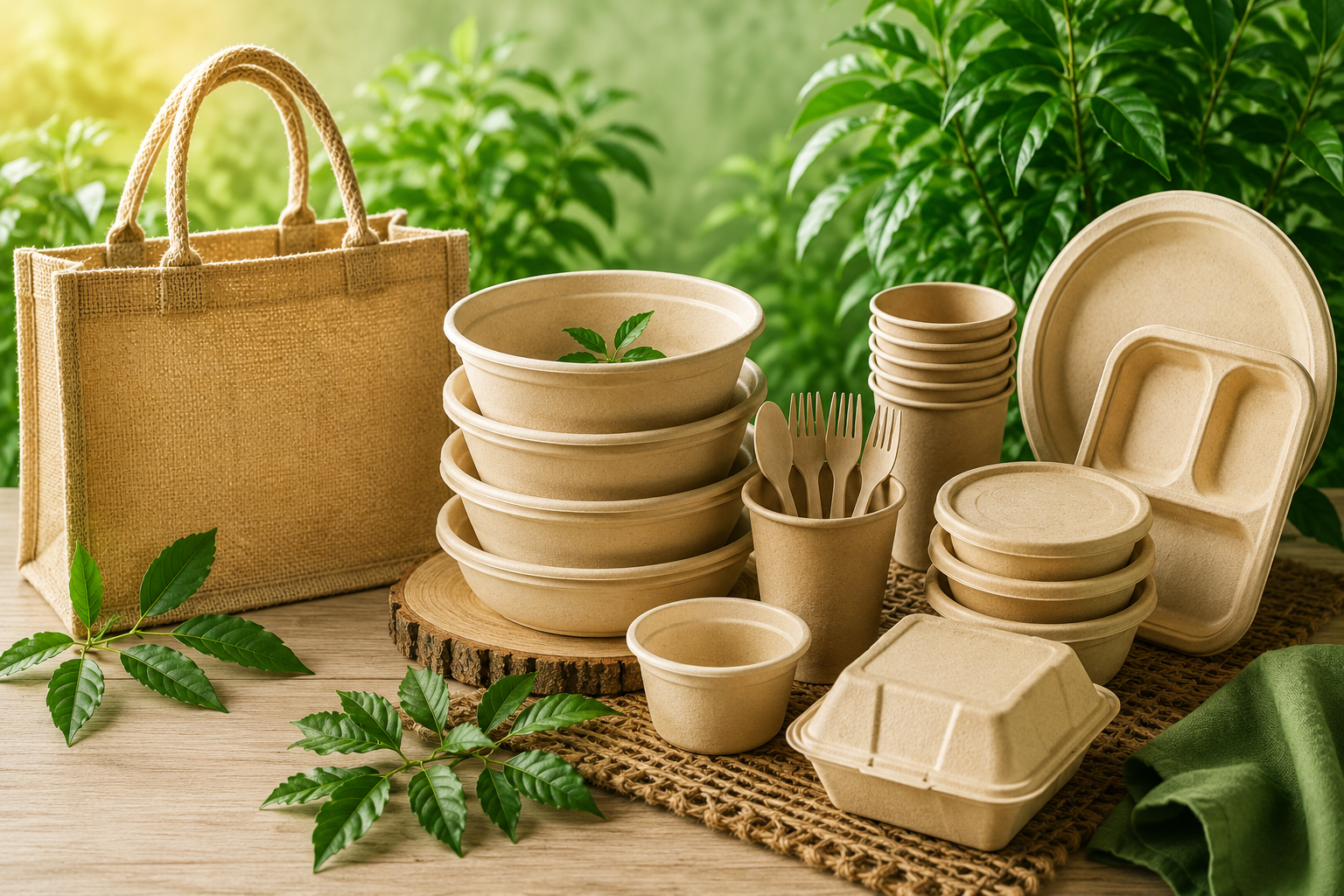
These products may be manufactured using plant-based fibers such as sugarcane bagasse and other renewable materials. Depending on the product, they can include plates, bowls, trays, meal containers, clamshells, and other food-packaging solutions.
The exact environmental benefits depend on the material, manufacturing process, product certification, and disposal system available in a particular location. Businesses should therefore check product specifications and certifications before making specific environmental claims.
For food businesses, the main advantage is having access to convenient serving products while exploring alternatives to traditional disposable materials.
Why Are Sustainable Tableware Options Becoming Popular?
Restaurants and food-service businesses use large quantities of tableware every day. A busy restaurant can serve hundreds of meals, while a catering company may serve thousands of guests during a large event.
Because these products are purchased frequently, businesses are paying greater attention to the materials they choose.
Customers are also becoming more interested in sustainability. They may notice packaging and tableware choices when ordering food, attending events, or visiting restaurants.
As a result, eco-friendly disposable tableware can become part of a wider business strategy focused on responsible sourcing and improved customer experience.
However, businesses should remember that sustainability involves more than choosing a particular material. Responsible purchasing, efficient inventory management, waste reduction, transportation, and appropriate disposal are also important.
Benefits for Restaurants
Restaurants need tableware that can handle everyday food-service requirements. Depending on the business model, disposable plates and bowls may be used for takeaway orders, outdoor dining, special events, promotional activities, or high-volume services.
Using eco-friendly disposable tableware can give restaurants another option when selecting food-service products.
Restaurants can choose different shapes and sizes according to their menus. Large plates may be appropriate for complete meals, while smaller plates can be used for snacks, desserts, or appetizers.
Bowls can be useful for salads, rice dishes, soups where appropriate, desserts, and other foods that require deeper containers.
The correct product should always be selected according to the food, temperature, portion size, and intended application.
Advantages for Cafés
Cafés often serve food and beverages throughout the day, making convenient tableware an important part of their operations.
Breakfast items, sandwiches, snacks, desserts, salads, and takeaway meals may require different types of containers or serving products.
Eco-friendly disposable tableware can be considered for suitable café applications where disposable products are preferred.
For takeaway customers, lightweight containers and plates can simplify food handling. For special promotions or outdoor café services, disposable products can also make operations more convenient.
Café owners should consider product dimensions, stacking, storage, food compatibility, and purchasing quantities before selecting products.
A Practical Choice for Catering Companies
Catering businesses have unique requirements because food often needs to be served to large groups within a limited period.
Weddings, corporate meetings, exhibitions, birthday parties, festivals, conferences, and outdoor gatherings can involve hundreds or thousands of guests.
For these situations, eco-friendly disposable tableware can help catering teams organize food service efficiently.
Plates, bowls, trays, and containers can be selected according to the menu and serving style. Lightweight products can also make transportation and distribution easier.
Caterers should estimate guest numbers carefully before purchasing. Ordering the correct quantity helps avoid unnecessary inventory while ensuring that there are enough products for the event.
Benefits for Hotels and Resorts
Hotels and resorts operate a variety of food-service areas. Breakfast rooms, restaurants, conferences, room service, outdoor functions, poolside events, and private celebrations may all have different requirements.
For selected applications, eco-friendly disposable tableware can provide a convenient option for hospitality businesses.
Hotels can use suitable disposable products for large events, outdoor functions, temporary food stations, or takeaway services.
The appearance of tableware is also important in hospitality. Products should complement the presentation of food and maintain the professional experience expected by guests.
Large hotels should also evaluate supplier reliability, product consistency, packaging, storage requirements, and delivery schedules.
Ideal for Events and Outdoor Gatherings
Outdoor events often require simple food-service solutions. Organizers may not have access to conventional dishwashing facilities, especially at festivals, exhibitions, sporting events, community gatherings, and private celebrations.
Eco-friendly disposable tableware can help event organizers manage food service when disposable products are appropriate.
Event planners should consider the expected number of guests, menu, serving method, product storage, transportation, and waste collection before selecting tableware.
Disposal planning is especially important. If products are marketed as compostable, organizers should verify whether suitable composting facilities are actually available in the event location.
Takeaway and Food Delivery Applications
The growth of takeaway and food delivery has increased the importance of convenient food packaging.
Customers expect their meals to arrive safely, neatly organized, and in suitable containers. Restaurants need packaging that matches their menu and transportation requirements.
Eco-friendly disposable tableware can be used alongside suitable food containers for selected takeaway applications.
Different foods have different packaging requirements. Dry snacks, salads, rice dishes, curries, desserts, and combination meals may require different designs.
Businesses should evaluate moisture resistance, oil resistance, temperature suitability, container size, closure design, and transportation conditions before selecting packaging.
Plant-Based Materials and Bagasse
Sugarcane bagasse is one of the plant-based materials used to manufacture food-service products.
Bagasse is the fibrous material remaining after sugarcane is processed. The fibers can be processed and molded into products such as plates, bowls, trays, and food containers.
This creates another use for an agricultural byproduct and allows manufacturers to produce plant-fiber-based food-service products.
For businesses interested in renewable material options, bagasse products can be an important part of their tableware selection.
However, businesses should always review the specifications of individual products rather than assuming that every plant-based product has the same performance or disposal characteristics.
How to Choose the Right Disposable Tableware
Choosing eco-friendly disposable tableware requires more than simply selecting a product labeled as environmentally friendly.
Businesses should evaluate several important factors.
Food Type
Consider the food that will be served. Hot meals, cold foods, oily dishes, sauces, desserts, salads, and snacks may require different product specifications.
Size and Capacity
Select plate sizes and bowl capacities according to portion sizes. Proper sizing can improve presentation and help manage inventory.
Strength
Tableware should be suitable for the way it will be handled. Catering, takeaway, and delivery businesses may require products designed for transportation and frequent handling.
Temperature
Businesses should check whether products are suitable for hot, refrigerated, frozen, or reheated food. Temperature performance varies between products.
Storage
Bulk tableware requires sufficient storage space. Products that stack efficiently can help businesses use available storage more effectively.
Certifications
Commercial buyers should check applicable food-contact certifications and environmental certifications where relevant. Documentation can help businesses make accurate product claims.
Eco-Friendly Tableware and Brand Image
Modern customers often notice the details surrounding their food experience.
A restaurant that uses natural-looking tableware and responsible packaging can communicate a clear sustainability message. This can complement other business initiatives such as reducing food waste, improving recycling practices, and sourcing responsibly.
Eco-friendly disposable tableware can therefore contribute not only to food service but also to a company’s overall brand presentation.
Businesses should communicate environmental information honestly and avoid exaggerated claims. Clear product information helps customers understand exactly what they are purchasing and how it should be disposed of.
Responsible Disposal Is Important
Choosing an environmentally preferable product is only one part of responsible consumption.
Businesses must also consider what happens after the product has been used.
Some compostable food-service products are intended for commercial composting facilities rather than ordinary household compost bins. The availability of appropriate waste-management infrastructure varies by location.
Restaurants, caterers, and event organizers should therefore understand local disposal options.
Providing clearly labeled waste bins can also help staff and customers dispose of used tableware correctly.
Cost and Bulk Purchasing
Cost is an important factor for every commercial food-service business.
While sustainable products may have different pricing compared with conventional alternatives, businesses should evaluate total value rather than focusing only on the individual unit price.
Factors such as product quality, packaging quantity, storage efficiency, supplier reliability, delivery, and customer perception can all influence the overall value.
For businesses that purchase large quantities, negotiating suitable bulk orders can also improve purchasing efficiency.
Why Choose Inreign?
Inreign provides eco-friendly tableware and food-packaging solutions for modern businesses.
The product range is suitable for various commercial applications, including restaurants, cafés, hotels, catering companies, healthcare facilities, retail businesses, and other food-service operations.
Businesses can explore different tableware and packaging formats according to their individual requirements.
When choosing a supplier, companies should consider product specifications, availability, quality consistency, packaging, order quantities, and delivery requirements.
A reliable supplier can help businesses maintain a consistent supply of essential food-service products.
The Future of Sustainable Food Service
The demand for sustainable food-service solutions is likely to continue as businesses and customers become more conscious of materials and waste.
Manufacturing innovation is creating new opportunities for plant-based fibers and other alternative materials. At the same time, improvements in waste-management systems can help businesses make better use of products designed for specific end-of-life pathways.
Eco-friendly disposable tableware is one part of this broader transformation.
The future of food service will likely involve a combination of reusable products, recyclable materials, compostable products, renewable resources, improved packaging design, and better waste-management practices.
There is no single solution for every business. The best approach is to select products according to the actual food-service application and environmental infrastructure available.
Conclusion
Eco-friendly disposable tableware provides restaurants, cafés, hotels, caterers, event organizers, takeaway businesses, and retailers with another option when choosing food-service products.
From plates and bowls to trays and containers, plant-based tableware can support a variety of applications while helping businesses consider more responsible material choices.
The most effective approach is to evaluate the complete product lifecycle. Businesses should consider the material, manufacturing process, product performance, transportation, storage, customer use, and disposal requirements.
By selecting suitable products and implementing responsible waste-management practices, food businesses can improve their operations while responding to growing customer interest in sustainability.
Inreign offers a range of eco-friendly tableware and food-packaging solutions designed for modern commercial requirements. Businesses can explore suitable products based on their menu, serving style, order volume, and application needs.
As food-service expectations continue to evolve, making thoughtful choices about everyday tableware can become an important part of building a more responsible and future-ready business.



 by
by