
The food-service and takeaway industries are changing rapidly as businesses look for packaging solutions that combine convenience, performance, and environmental responsibility. Restaurants, cafés, hotels, catering companies, food-delivery services, retailers, and event organizers use food packaging every day. As customer awareness around materials and waste continues to grow, businesses are increasingly exploring alternatives to conventional packaging.
Biodegradable Food Packaging is becoming an important option for businesses seeking packaging made from renewable or plant-based materials. Products such as food containers, bowls, trays, takeaway boxes, and clamshells can provide practical solutions for serving and transporting food while supporting more responsible material choices.
Modern food packaging needs to do more than simply hold food. It should provide suitable protection, maintain presentation, support convenient handling, and fit the operational needs of the business. The right packaging can also contribute to a company’s broader sustainability strategy.
What Is Biodegradable Food Packaging?
Biodegradable Food Packaging generally refers to food packaging made from materials capable of breaking down through natural biological processes under suitable conditions.
Depending on the product, biodegradable packaging may be produced from plant-based fibers, agricultural materials, paper-based materials, or other specially developed materials.
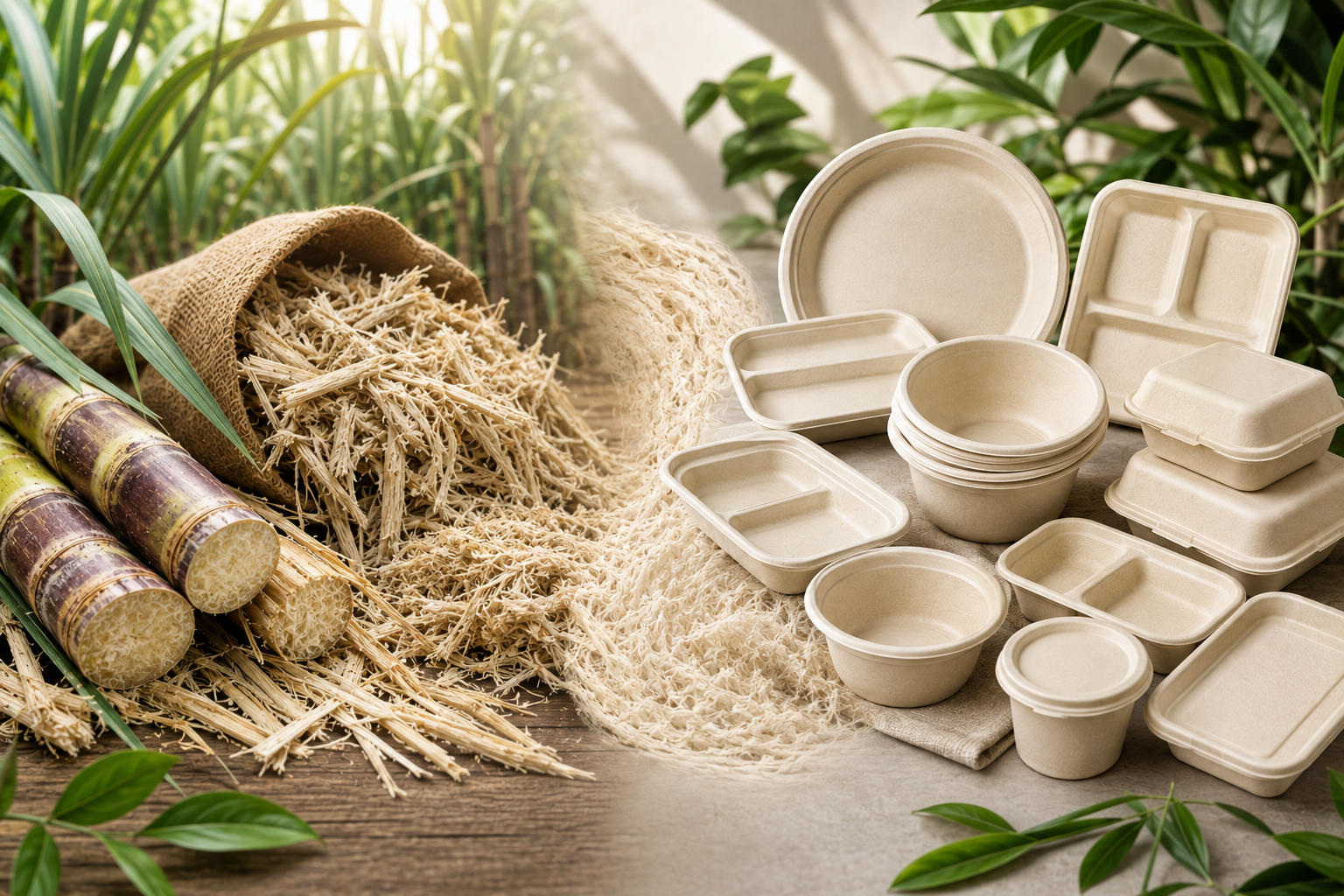
Sugarcane bagasse is one example of a plant fiber used in food-service packaging. Bagasse is the fibrous material left after sugarcane is processed. This material can be processed and molded into different food containers and serving products.
It is important to understand that not every biodegradable product behaves in exactly the same way. The breakdown process can depend on the material, environmental conditions, product composition, and available waste-management facilities.
Businesses should therefore review manufacturer specifications and applicable certifications before selecting packaging or making environmental claims.
Why Is Biodegradable Food Packaging Becoming Popular?
Food packaging is used in enormous quantities across the world. Takeaway meals, food delivery, catering, restaurants, cafés, supermarkets, and events all depend on packaging to protect and transport food.
Because packaging is used so frequently, businesses are paying more attention to the materials they purchase.
Customers are also becoming increasingly aware of packaging choices. Many consumers prefer businesses that demonstrate responsible practices, particularly when those practices are visible during the food-purchasing experience.
Choosing Biodegradable Food Packaging can be one part of a wider strategy that includes responsible sourcing, waste reduction, efficient inventory management, and better disposal practices.
1. Made From Plant-Based Resources
One of the important features of some biodegradable food packaging products is the use of plant-based materials.
Sugarcane bagasse is a good example. After sugarcane juice is extracted, the remaining fibrous material can be processed for other applications.
Using agricultural fibers for packaging creates an additional use for these resources and supports the development of plant-fiber-based products.
For businesses interested in renewable material options, plant-based packaging can provide an alternative to some conventional packaging materials.
However, the environmental performance of a product should always be evaluated according to its complete lifecycle, including manufacturing, transportation, use, and disposal.
2. Suitable for Restaurants
Restaurants need packaging that matches their menus and service models.
A restaurant may serve dine-in customers while also handling takeaway orders and food delivery. Different meals may require different container sizes and shapes.
Biodegradable Food Packaging can provide suitable options for takeaway meals, side dishes, desserts, snacks, salads, and other food-service applications, depending on the individual product.
Businesses should consider the type of food, portion size, temperature, moisture, oil content, transportation time, and required container strength before choosing packaging.
The correct container can help maintain food presentation while making takeaway operations more organized.
3. Useful for Cafés and Takeaway Businesses
Cafés often serve a combination of food and beverages. Sandwiches, snacks, salads, desserts, bakery products, and takeaway meals may all require different packaging.
Biodegradable Food Packaging can be considered for suitable takeaway applications where businesses want to explore plant-based or biodegradable material options.
The packaging should be selected according to the food being served. A dry bakery item may have different requirements from a meal containing sauces or moisture.
Café owners should also consider how packaging will be stored, transported, and disposed of after use.
4. Benefits for Catering Companies
Catering companies frequently serve large groups at weddings, conferences, corporate events, exhibitions, festivals, and private celebrations.
These businesses need packaging that can be purchased in bulk, transported efficiently, distributed quickly, and handled easily.
Biodegradable Food Packaging can be useful for catering applications where disposable containers are appropriate.
Food containers and trays can be selected according to portion sizes and menu requirements. Bulk purchasing can also help catering companies maintain a consistent supply during busy periods.
Before ordering, caterers should calculate the number of guests and determine how many containers, trays, bowls, and other products will be required.
5. Convenient for Food Delivery
Food delivery has become an important part of the modern restaurant industry.
Customers expect meals to arrive safely, neatly packed, and in suitable containers. Packaging must withstand handling during transportation while maintaining the appearance and organization of the meal.
Biodegradable Food Packaging can provide food-delivery businesses with additional packaging options.
Different foods require different packaging solutions. Rice dishes, salads, curries, snacks, desserts, and combination meals may require different sizes, depths, closures, or container designs.
Businesses should always check the product’s intended application before using it for delivery.
6. Helps Create a Professional Food Presentation
Packaging is part of the customer’s overall experience.
A clean, well-designed food container can make takeaway meals look more organized and professional. Good packaging can also support a brand’s visual identity.
For businesses promoting natural ingredients, sustainability, organic products, or responsible sourcing, plant-based packaging can complement the overall customer experience.
The appearance of Biodegradable Food Packaging can therefore have value beyond its practical function.
However, businesses should ensure that environmental messaging is accurate and supported by appropriate product information.
7. Suitable for Hotels and Hospitality
Hotels and resorts have many food-service requirements.
Room service, breakfast areas, conferences, outdoor events, private functions, and takeaway services may all require different packaging products.
Hotels can consider Biodegradable Food Packaging for selected applications where disposable packaging is suitable.
For large hospitality businesses, supplier reliability is especially important. A shortage of food containers during a busy event or high-occupancy period can create operational problems.
Procurement teams should therefore evaluate product availability, packaging quantities, dimensions, quality consistency, and delivery schedules.
8. Useful for Events and Outdoor Functions
Events often involve serving food to large numbers of people within a short period.
Outdoor festivals, exhibitions, corporate gatherings, community events, sporting activities, and private celebrations may have limited access to traditional dishwashing facilities.
Biodegradable Food Packaging can be considered when organizers need convenient disposable food containers.
Event planners should also plan waste collection before the event begins. If products are designed for commercial composting, organizers should verify whether a suitable facility is available in the event location.
Choosing a packaging material without considering its disposal pathway can reduce the environmental benefits intended by the purchasing decision.
9. Supports More Responsible Packaging Strategies
Sustainability is not achieved through one product alone.
Businesses can combine Biodegradable Food Packaging with other responsible practices, including reducing unnecessary packaging, improving inventory management, minimizing food waste, using efficient transportation, and educating staff about waste separation.
The most effective sustainability strategies consider the complete operation.
For example, using the correct container size can reduce unnecessary material use, while efficient inventory management can help prevent damaged or expired packaging stock.
Responsible purchasing therefore involves both material selection and operational efficiency.
How to Choose the Right Biodegradable Food Packaging
Selecting packaging requires careful consideration of the business’s actual requirements.
Consider the Food Type
Start by identifying the foods that will be packed. Dry foods, hot meals, salads, desserts, oily foods, and meals containing sauces can have different packaging requirements.
Select the Correct Size
The container should match the portion size. A container that is too large can waste space and material, while one that is too small may affect food presentation.
Check Strength and Durability
Packaging should be suitable for transportation and handling. Food-delivery businesses should consider how containers will perform during movement from the kitchen to the customer.
Check Temperature Requirements
Some packaging products may be designed for particular temperature ranges or applications. Businesses should verify whether products are suitable for hot, chilled, refrigerated, frozen, or reheated food.
Review Certifications
Businesses should check relevant food-contact and environmental certifications where applicable. Certifications can help verify product claims and support responsible purchasing decisions.
Consider Storage Requirements
Commercial businesses often purchase packaging in large quantities. Packaging that stacks efficiently can help save storage space and simplify inventory management.
Biodegradable Packaging vs. Conventional Packaging
Conventional packaging can offer convenience, availability, and low cost, but businesses are increasingly evaluating the environmental characteristics of the materials they use.
Biodegradable Food Packaging provides another option for companies exploring materials that can break down under suitable biological conditions.
However, businesses should not assume that biodegradable automatically means compostable, recyclable, or suitable for home composting. These terms describe different properties and end-of-life pathways.
The best approach is to review the specific product information and understand how it should be disposed of.
Importance of Responsible Disposal
The end of a product’s useful life is an important part of packaging sustainability.
Some biodegradable or compostable products may require specific environmental conditions to break down effectively. Commercial composting facilities, for example, may provide conditions that are different from ordinary household waste environments.
Businesses should therefore understand the waste-management infrastructure available in their area.
Restaurants, catering companies, and event organizers can also improve disposal by providing clearly labeled collection bins and training staff about appropriate waste separation.
The Role of Inreign
Inreign provides eco-friendly tableware and food-packaging solutions designed for modern commercial requirements.
Its solutions can support different industries, including restaurants, cafés, hotels, catering businesses, healthcare facilities, retail businesses, and other food-service operations.
For companies considering a transition toward more sustainable packaging, having access to different product formats can make it easier to select packaging according to specific applications.
Businesses should evaluate product dimensions, capacity, material specifications, order quantities, packaging, availability, and delivery requirements before placing bulk orders.
Future of Biodegradable Food Packaging
The food-packaging industry is continuing to develop as manufacturers explore renewable resources, plant fibers, improved molding technologies, and more efficient production methods.
The future may bring more packaging options designed for different food types and commercial applications.
At the same time, waste-management systems will continue to influence how sustainable packaging performs at the end of its useful life.
For businesses, the future of packaging will likely involve a combination of material innovation, efficient design, responsible purchasing, and improved waste management.
Biodegradable Food Packaging can be an important part of this transition when selected and disposed of appropriately.
Why Businesses Should Consider Sustainable Packaging
Packaging decisions affect more than purchasing budgets. They can influence customer perception, storage requirements, operational efficiency, brand image, and waste-management practices.
Businesses that carefully evaluate their packaging can identify opportunities to improve both customer experience and resource management.
Choosing suitable Biodegradable Food Packaging can be one practical step within a larger sustainability strategy.
The goal should not be to choose packaging simply because it has an environmentally friendly label. Instead, businesses should consider product performance, food safety, environmental characteristics, availability, cost, and disposal requirements together.
Conclusion
Biodegradable Food Packaging is becoming an important consideration for restaurants, cafés, hotels, caterers, food-delivery businesses, retailers, and event organizers.
From molded bowls and plates to takeaway containers, trays, and clamshell packaging, biodegradable solutions can support a wide variety of food-service applications.
Plant-based materials such as sugarcane bagasse provide an interesting option for businesses looking to explore renewable resources in their packaging strategy. However, product specifications, certifications, intended use, and disposal requirements should always be checked before purchasing.
A successful sustainable packaging strategy involves more than choosing a different material. It includes selecting the correct product size, reducing unnecessary packaging, managing inventory efficiently, using products appropriately, and following responsible disposal practices.
For modern food businesses, these combined decisions can create a more efficient and thoughtful approach to packaging.
Inreign offers eco-friendly tableware and food-packaging solutions for businesses seeking practical products for restaurants, cafés, hotels, catering, takeaway, and other commercial applications. By selecting packaging according to specific operational requirements, businesses can balance functionality, presentation, convenience, and environmental responsibility.



 by
by