
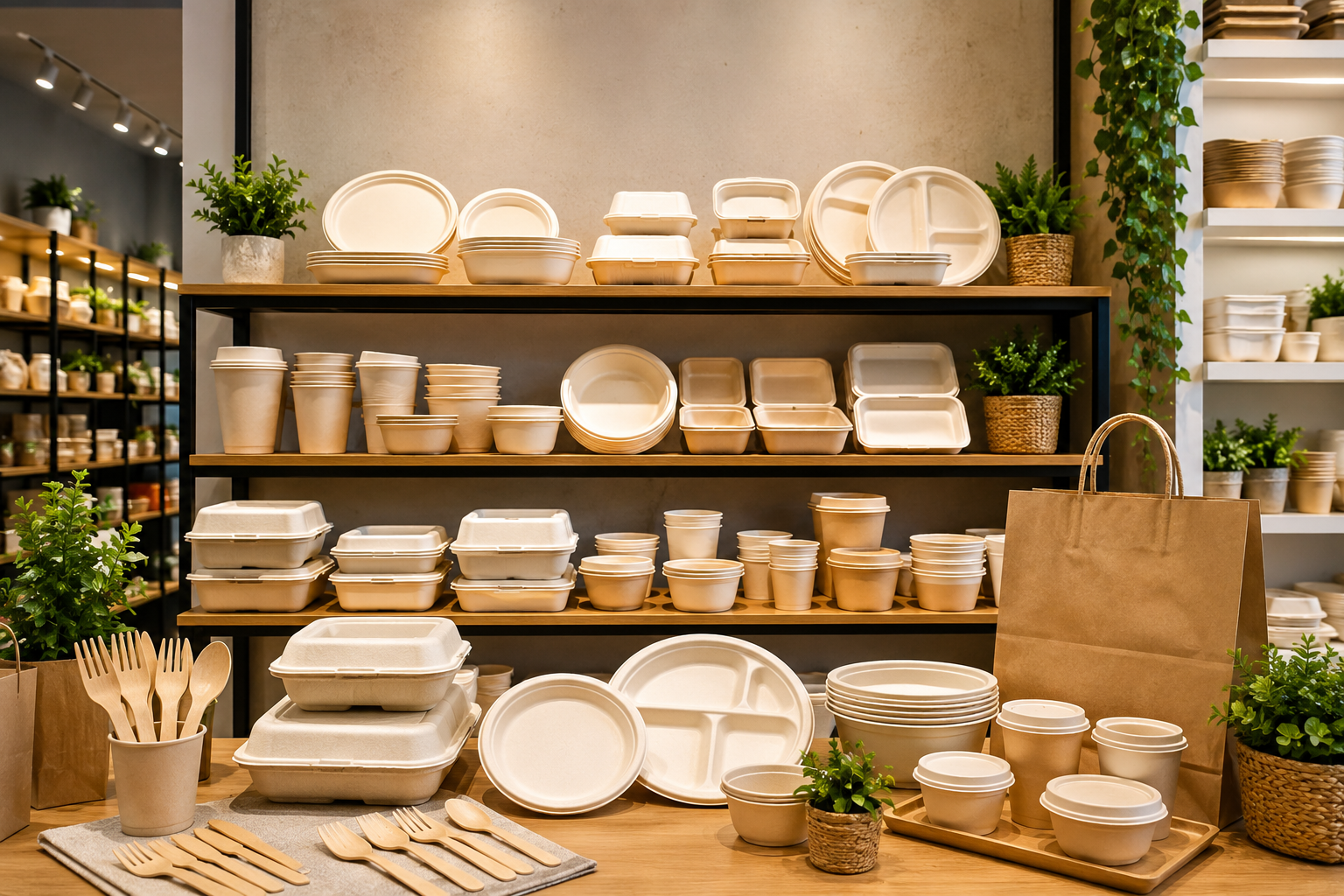
The food-service industry is changing rapidly as restaurants, cafés, hotels, catering companies, takeaway businesses, and food-delivery services look for better packaging choices. Sustainable Food Packaging has become an important consideration for businesses that want practical food-service products while paying greater attention to material selection and waste management.
Food packaging needs to protect meals, maintain presentation, support transportation, and provide convenience for customers. At the same time, businesses are exploring alternative materials such as plant fibers, molded fiber, sugarcane bagasse, and other packaging solutions.
Choosing Sustainable Food Packaging should not be based only on appearance or marketing claims. Businesses should consider the material, strength, food safety, size, temperature requirements, storage, certifications, and disposal process.
This article explains five important benefits and considerations businesses should understand before selecting packaging.
1. Alternative Material Options
One of the main advantages of Sustainable Food Packaging is that businesses can explore alternatives to some conventional packaging materials.
Many modern products use plant-based or fiber-based materials. Sugarcane bagasse is one example that is commonly used to manufacture plates, bowls, trays, and takeaway containers.
Bagasse is the fibrous material remaining after sugarcane processing. These fibers can be processed and molded into different food-service products.
For restaurants and catering companies, Sustainable Food Packaging made from plant-based materials can provide practical options for selected applications.
However, every product is different. Businesses should check the manufacturer’s specifications, material composition, certifications, and recommended uses before making a purchase.
Understanding the material is especially important when businesses want to communicate sustainability information to customers.
2. Better Takeaway and Delivery Experience
Takeaway and food delivery have become important parts of modern food businesses. Packaging needs to protect food during transportation while keeping meals organized and presentable.
Sustainable Food Packaging can provide different container designs for takeaway and delivery applications.
Restaurants may need containers for rice dishes, curries, salads, noodles, desserts, snacks, and complete meals. Each type of food can have different packaging requirements.
When choosing packaging, businesses should consider:
- Food type
- Portion size
- Container strength
- Lid design
- Temperature
- Moisture
- Oil resistance
- Transportation time
- Ease of handling
Suitable Sustainable Food Packaging can make food easier to pack, transport, and serve.
Good packaging can also improve the customer’s overall experience. Customers expect takeaway meals to arrive safely and look presentable.
3. Flexible Options for Different Businesses
Different food businesses have different requirements.
Restaurants may need larger meal containers, while cafés may need smaller packaging for bakery products, sandwiches, snacks, and desserts.
Catering companies may require hundreds or thousands of products for a single event.
Hotels can need packaging for outdoor events, conferences, takeaway services, and special functions.
Sustainable Food Packaging is available in different shapes, sizes, and designs, allowing businesses to select products according to their individual needs.
Restaurants
Restaurants can use suitable containers for takeaway meals, side dishes, desserts, salads, and delivery orders.
Cafés
Cafés can select appropriate packaging for sandwiches, pastries, snacks, bakery products, and takeaway meals.
Catering Companies
Caterers can choose plates, bowls, trays, and containers according to the menu and number of guests.
Hotels
Hotels may use disposable packaging for selected events, outdoor services, and takeaway applications.
Food Delivery
Delivery businesses should focus on container strength, secure closures, appropriate sizes, and transportation performance.
The flexibility of Sustainable Food Packaging makes it possible to select different formats for different food-service applications.
4. Supports Sustainability Objectives
Packaging is one part of a company’s overall sustainability strategy.
Businesses may also work on reducing food waste, improving inventory management, reducing unnecessary packaging, and improving waste collection.
Using Sustainable Food Packaging can complement these efforts when the products are selected according to actual business requirements.
A responsible packaging strategy should consider the entire product lifecycle.
This includes:
Material → Manufacturing → Transportation → Storage → Use → Disposal
Looking at the complete lifecycle helps businesses make better purchasing decisions.
It is also important to communicate environmental information accurately. Businesses should avoid unsupported claims and rely on manufacturer information or relevant certifications.
For companies developing sustainability policies, Sustainable Food Packaging can be one practical component of a broader responsible-business approach.
5. Different Designs for Different Foods
Food packaging needs to be practical.
Different container designs are suitable for different food types and serving styles.
Bowls
Bowls can be suitable for salads, desserts, snacks, and selected meals.
Trays
Trays can be useful for catering, events, bakery products, and food presentation.
Compartment Containers
Compartment designs can help keep different foods separated.
Clamshell Containers
Clamshell-style products can be useful for takeaway and delivery meals.
Small Containers
Small containers can be suitable for sauces, dips, toppings, and smaller portions.
When choosing Sustainable Food Packaging, businesses should consider both design and functionality.
Container size is also important. A container that is too small may cause food to overflow, while a container that is too large can create unnecessary empty space.
Food Safety and Packaging
Food safety should always be a priority.
Businesses should select packaging specifically designed for food-contact applications and follow manufacturer recommendations.
Different foods can have different packaging requirements. Hot meals, oily foods, sauces, chilled salads, desserts, and dry snacks may require different characteristics.
Before using Sustainable Food Packaging, businesses should check whether the product is suitable for the intended food and temperature.
Temperature requirements should also be considered. If packaging will be used with hot, chilled, frozen, or reheated food, the manufacturer’s instructions should be reviewed carefully.
Businesses should never assume that a particular material is automatically suitable for every food or temperature.
Strength and Durability
Packaging must be strong enough for its intended application.
A takeaway container may need to withstand transportation from the restaurant to the customer’s home.
Catering packaging may need to be stacked, transported, and distributed at large events.
When testing Sustainable Food Packaging, businesses should check whether containers remain stable when filled with actual food.
Important factors include:
- Container rigidity
- Lid security
- Stackability
- Portion capacity
- Handling
- Transportation
- Storage
Testing packaging before making a large purchase can help identify problems early.
Choosing the Right Size
Size is another important factor.
Businesses should select containers according to their typical serving portions.
Using the correct size can improve food presentation and storage efficiency.
For restaurants with different menu portions, several container sizes may be more practical than using one universal container.
Proper sizing can also help reduce unnecessary packaging space.
When selecting Sustainable Food Packaging, businesses should compare container dimensions and capacities with their actual menu requirements.
Understanding Disposal
The end-of-life stage is an important part of packaging selection.
Terms such as biodegradable, compostable, recyclable, and plant-based do not necessarily mean the same thing.
Some packaging products may require specific commercial facilities for processing after use.
Businesses should understand the recommended disposal method for their selected Sustainable Food Packaging.
Local waste-management infrastructure should also be considered.
Restaurants, catering companies, and event organizers can support better disposal by providing clearly labeled collection bins and communicating disposal instructions where appropriate.
Storage and Inventory Management
Packaging is often purchased in bulk.
For businesses with limited storage space, container design and stackability can make a significant difference.
Products that stack efficiently can help businesses organize their inventory and use available storage more effectively.
Before ordering Sustainable Food Packaging in large quantities, businesses should calculate their average monthly usage and available storage capacity.
Proper inventory planning can help prevent both shortages and excessive stock.
Testing Before Bulk Orders
Testing is an important step before purchasing large quantities.
Businesses can request samples and use them with actual menu items.
During testing, evaluate:
- Food fit
- Container strength
- Lid performance
- Leakage
- Presentation
- Handling
- Transportation
- Storage
- Customer convenience
Testing Sustainable Food Packaging under real operating conditions provides a better understanding of whether the product is suitable for the business.
A product may look excellent in photographs but perform differently when used with actual food.
Customer Perception
Packaging is visible to customers, especially in takeaway and delivery businesses.
Natural-looking packaging can complement brands that focus on fresh ingredients, responsible sourcing, or sustainability.
However, businesses should ensure that their marketing claims are accurate.
Rather than making broad statements, businesses can explain the specific material and product characteristics supported by available documentation.
Good Sustainable Food Packaging can therefore contribute to both practical food service and thoughtful brand presentation.
Why Choose Inreign?
Inreign provides eco-friendly tableware and food-packaging solutions for modern commercial applications.
Restaurants, cafés, hotels, catering companies, takeaway businesses, and event organizers can explore products according to their individual packaging requirements.
When selecting products, businesses should consider material, dimensions, strength, food compatibility, temperature suitability, certifications, storage, and disposal.
The right supplier can help businesses maintain consistent product availability while selecting packaging that fits their operational needs.
For businesses exploring Sustainable Food Packaging, choosing products according to actual applications is more effective than selecting packaging based only on appearance.
Conclusion
Sustainable Food Packaging can provide practical options for restaurants, cafés, hotels, catering companies, takeaway businesses, and food-delivery services.
The five major benefits include access to alternative materials, improved takeaway experiences, flexible product choices, support for sustainability objectives, and different designs for different food applications.
However, businesses should carefully evaluate packaging before purchasing. Material, food safety, durability, size, temperature, storage, certifications, and disposal requirements all matter.
Plant-based materials such as sugarcane bagasse can provide useful options for selected applications, but businesses should always follow the specific manufacturer’s instructions.
A successful packaging strategy is not simply about choosing a product labeled sustainable. It is about selecting the right product for the right food, using it correctly, managing inventory efficiently, and understanding the appropriate disposal pathway.
By making informed decisions, businesses can use Sustainable Food Packaging as part of a broader approach to practical, responsible, and customer-focused food service.



 by
by