
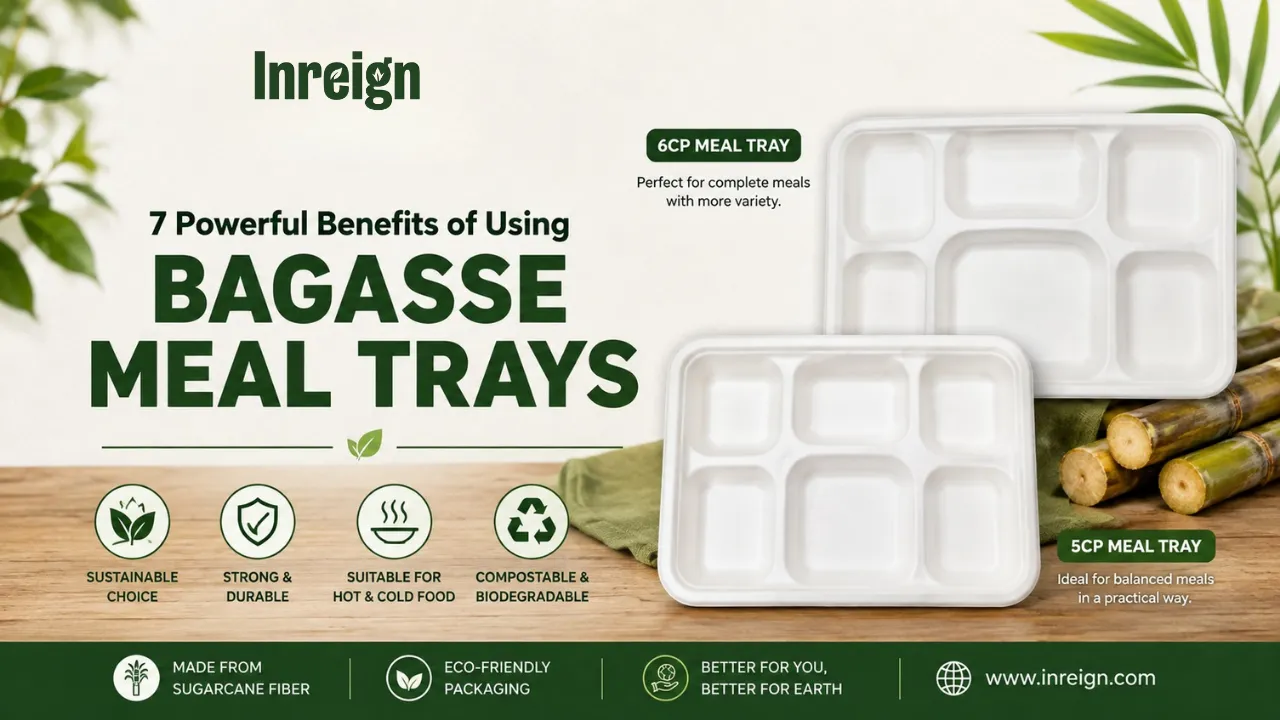
7 Powerful Benefits of Using Bagasse Meal Trays
As food delivery, takeaway, and catering services continue to grow, businesses are looking for food packaging that is practical, convenient, and more environmentally responsible. Traditional plastic trays have been widely used because they are affordable and easy to handle, but businesses are increasingly exploring plant-based alternatives.
Bagasse Meal Trays are one such option. Made from sugarcane fiber, these trays are designed for serving and packaging different types of meals. They are available in different sizes and compartment designs, making them useful for restaurants, caterers, food delivery businesses, events, and takeaway services.
But what makes them a useful choice for food businesses?
Here are seven important benefits to consider.
What Are Bagasse Meal Trays?
Bagasse is the fibrous material left behind after sugarcane is crushed to extract its juice. This fiber can be processed into pulp and molded into different food-service products.
Bagasse Meal Trays are made from this sugarcane fiber and can be designed with multiple compartments. The separate sections make it easier to serve different foods in the same tray without mixing everything together.
Depending on the design, meal trays can be useful for serving:
- Rice and curry
- Vegetables
- Snacks
- Salads
- Desserts
- Main meals
- Combination meals
- Catering portions
Their compartment-style design makes them particularly useful for Indian meals and other dishes that contain several separate food items.
1. Made From Sugarcane Fiber
One of the main reasons businesses consider Bagasse Meal Trays is their plant-based material.
Bagasse comes from sugarcane processing. Instead of treating the leftover fiber simply as waste, it can be processed and molded into useful food-service products.
This gives businesses an alternative to conventional plastic trays and allows them to explore food packaging made from plant-based fiber.
For restaurants and food businesses that are working toward more responsible packaging choices, sugarcane-based products can be an attractive option.
2. Convenient for Serving Different Foods
A meal tray with separate compartments can make food presentation and serving much easier.
For example, a single tray can hold rice in one section, curry in another, vegetables in another, and additional sides in separate compartments.
This can be particularly useful for:
- Indian restaurants
- Catering businesses
- School and college cafeterias
- Corporate cafeterias
- Food delivery services
- Events and functions
- Takeaway restaurants
Instead of using multiple containers for one meal, a compartment tray can keep different food items organized in one convenient package.
3. Helps Keep Food Items Separate
Nobody wants their entire meal to become mixed together during transportation.
The compartments in Bagasse Meal Trays help separate different foods. This can be useful when a meal contains dry and wet items, side dishes, vegetables, rice, or desserts.
Keeping different foods separated can also make the meal look more organized when it reaches the customer.
For takeaway and delivery businesses, good food presentation can contribute to a better customer experience.
4. Suitable for Takeaway and Food Delivery
The growth of takeaway and food delivery has increased the demand for practical meal packaging.
Restaurants need containers that are easy to pack, carry, and distribute. Bagasse Meal Trays can be considered for different takeaway applications depending on the product’s design and specifications.
They can be useful for:
- Restaurant takeaway
- Food delivery
- Office meals
- Catering orders
- Packed lunches
- Events
- Outdoor food service
When choosing a tray, businesses should consider the type of food being served, portion size, temperature, moisture, and transportation requirements.
5. Available With Multiple Compartments
Different meals require different packaging designs. Some meals may need only one large section, while others may require several compartments.
Bagasse Meal Trays are available in different compartment configurations, allowing businesses to select a design according to their menu.
Multi-compartment trays can be particularly useful for meals containing several components.
For example, a restaurant serving a complete meal may need separate spaces for:
- Main dish
- Rice
- Curry
- Vegetables
- Salad
- Dessert
- Side dishes
This makes compartment trays a practical solution for businesses serving combination meals.
6. Lightweight and Easy to Handle
Food businesses often need to transport large quantities of packaging every day. Heavy packaging can take up additional storage space and make transportation more difficult.
Bagasse products are generally lightweight, making them convenient for handling and distribution.
Bagasse Meal Trays can be useful for restaurants, caterers, event organizers, and food delivery businesses that need to manage large volumes of food packaging.
They can be stored, transported, packed, and distributed without adding unnecessary weight to food-service operations.
7. Supports Sustainable Packaging Goals
Businesses are paying more attention to the materials used in their food packaging.
Because bagasse is derived from sugarcane fiber, it provides a plant-based alternative to conventional plastic trays. Many bagasse products are also designed with compostability in mind.
However, businesses should always check the exact product specifications before making environmental claims. Compostability can depend on the product’s composition, coatings, certifications, and the waste-management facilities available in a particular location.
Choosing plant-fiber packaging can nevertheless be one part of a wider strategy for reducing dependence on conventional plastic products.
Bagasse Meal Trays for Restaurants
Restaurants can use meal trays for dine-in service, takeaway orders, catering, and food delivery.
They are especially useful for restaurants that serve complete meals with several different components.
For example, an Indian meal may include rice, dal, vegetables, curry, salad, and other sides. A compartment tray can help keep these items organized while making packaging more convenient.
Restaurants should select tray sizes and compartment configurations according to their menu and typical serving portions.
Bagasse Meal Trays for Catering
Catering businesses often serve large numbers of people at weddings, corporate functions, parties, festivals, and other events.
Using suitable meal trays can make food distribution more efficient, particularly when meals need to be packed and handed out quickly.
For caterers, important factors include:
- Tray size
- Number of compartments
- Food capacity
- Strength
- Moisture resistance
- Temperature suitability
- Storage requirements
- Quantity available
Selecting the right tray can make large-scale food service easier to manage.
Bagasse Meal Trays for Indian Food
Indian meals often contain several different dishes served together. Rice, dal, curry, vegetables, salad, sweets, and other side dishes may all be part of the same meal.
This makes compartment-style Bagasse Meal Trays particularly useful for Indian food businesses.
Separate sections can help maintain the presentation of different foods and make takeaway meals easier to organize.
For restaurants offering thali-style meals, combo meals, or packed lunches, compartment trays can be a practical packaging option.
Are Bagasse Meal Trays Suitable for Hot Food?
Many bagasse trays are designed for food-service applications involving hot food. However, the exact performance depends on the individual product.
Before using a tray with hot, oily, or moisture-heavy foods, businesses should check the manufacturer’s specifications.
Important factors include:
- Recommended temperature range
- Moisture resistance
- Oil resistance
- Strength
- Intended food application
Choosing a product according to the type of food being served helps ensure better performance.
Are Bagasse Meal Trays Compostable?
Many bagasse products are designed to be compostable under suitable conditions. However, not every product should automatically be considered compostable simply because it is made from bagasse.
The product’s composition, coatings, additives, certifications, and local waste-management infrastructure can affect its end-of-life options.
If compostability is important to your business, ask your supplier for the relevant product information and certifications.
How to Choose the Right Bagasse Meal Tray
Choosing the right tray starts with understanding your menu.
If you serve meals with multiple components, a multi-compartment design may be more useful. If you serve larger portions, you may need a tray with greater capacity.
Consider the following before ordering:
Meal Type: Identify the foods that will be served in the tray.
Portion Size: Select a suitable tray capacity for your typical serving size.
Number of Compartments: Choose the number of sections needed to keep different foods separate.
Food Temperature: Check whether the product is suitable for your intended temperature range.
Moisture and Oil: Consider whether your food contains sauces, liquids, or oils.
Quantity: For restaurants and caterers, make sure the supplier can provide the required volume consistently.
Product Quality: Look for reliable products with clear specifications and appropriate food-contact documentation.
Bagasse Meal Trays vs Plastic Trays
Both materials can be used for food-service applications, but they have different characteristics.
Plastic trays are widely available and can offer durability and flexibility. However, conventional plastic is not a plant-based material and can create waste-management challenges after single use.
Bagasse trays provide a sugarcane-fiber alternative and can be attractive to businesses looking to reduce their reliance on conventional plastic.
The right choice depends on your food application, performance requirements, budget, product specifications, and available disposal options.
Why Choose Inreign?
At Inreign, we provide food-service packaging solutions designed to meet the needs of modern restaurants, caterers, takeaway businesses, and other food-service operations.
Our Bagasse Meal Trays are available in different designs and compartment configurations to suit a variety of meal-serving requirements.
Whether you need packaging for Indian meals, takeaway orders, catering services, or events, choosing the right tray can help you organize food efficiently while exploring a plant-fiber-based alternative to conventional plastic packaging.
Frequently Asked Questions
What are Bagasse Meal Trays made from?
Bagasse Meal Trays are made from bagasse, the fibrous residue left after sugarcane is processed to extract its juice. The fiber can be processed into pulp and molded into food-service products.
Are Bagasse Meal Trays good for takeaway food?
Yes, they can be suitable for takeaway applications. However, businesses should select the tray according to the food type, portion size, temperature, moisture, and transportation requirements.
How many compartments do Bagasse Meal Trays have?
The number of compartments varies depending on the product design. Multi-compartment trays are useful for meals containing several different food items.
Can Bagasse Meal Trays be used for hot food?
Many products are designed for hot-food applications, but temperature resistance varies. Always check the manufacturer’s specifications before using a tray with very hot food.
Are Bagasse Meal Trays compostable?
Many bagasse products are designed to be compostable under suitable conditions. Businesses should check the specific product’s certifications and disposal requirements rather than assuming every bagasse product has the same properties.
Why are bagasse trays used for Indian meals?
Indian meals often contain several different dishes, such as rice, curry, vegetables, dal, salad, and desserts. Compartments help keep these foods separated and organized.
Conclusion
As restaurants, caterers, and takeaway businesses look for practical alternatives to conventional plastic packaging, Bagasse Meal Trays are becoming an option worth considering.
Their sugarcane-fiber material, lightweight design, multiple compartment options, and suitability for different food-service applications make them useful for restaurants, catering companies, food delivery businesses, and events.
For businesses serving complete meals, compartment trays can also make it easier to keep different food items organized during serving and transportation.
Before choosing a product, consider the tray size, number of compartments, food type, temperature, moisture resistance, product specifications, certifications, and available disposal options.
With the right product for the right application, Bagasse Meal Trays can provide a convenient food-service solution while supporting a move toward more plant-based packaging choices.
Stay Connected With Inreign
Follow Inreign on social media for the latest updates on Bagasse Meal Trays, sustainable tableware, eco-friendly packaging solutions, new products, and industry insights.
Follow us:
Facebook: @inreign_overseas
Instagram: Inreign-Overseas
Stay connected. Stay sustainable. Choose Inreign.



 by
by