
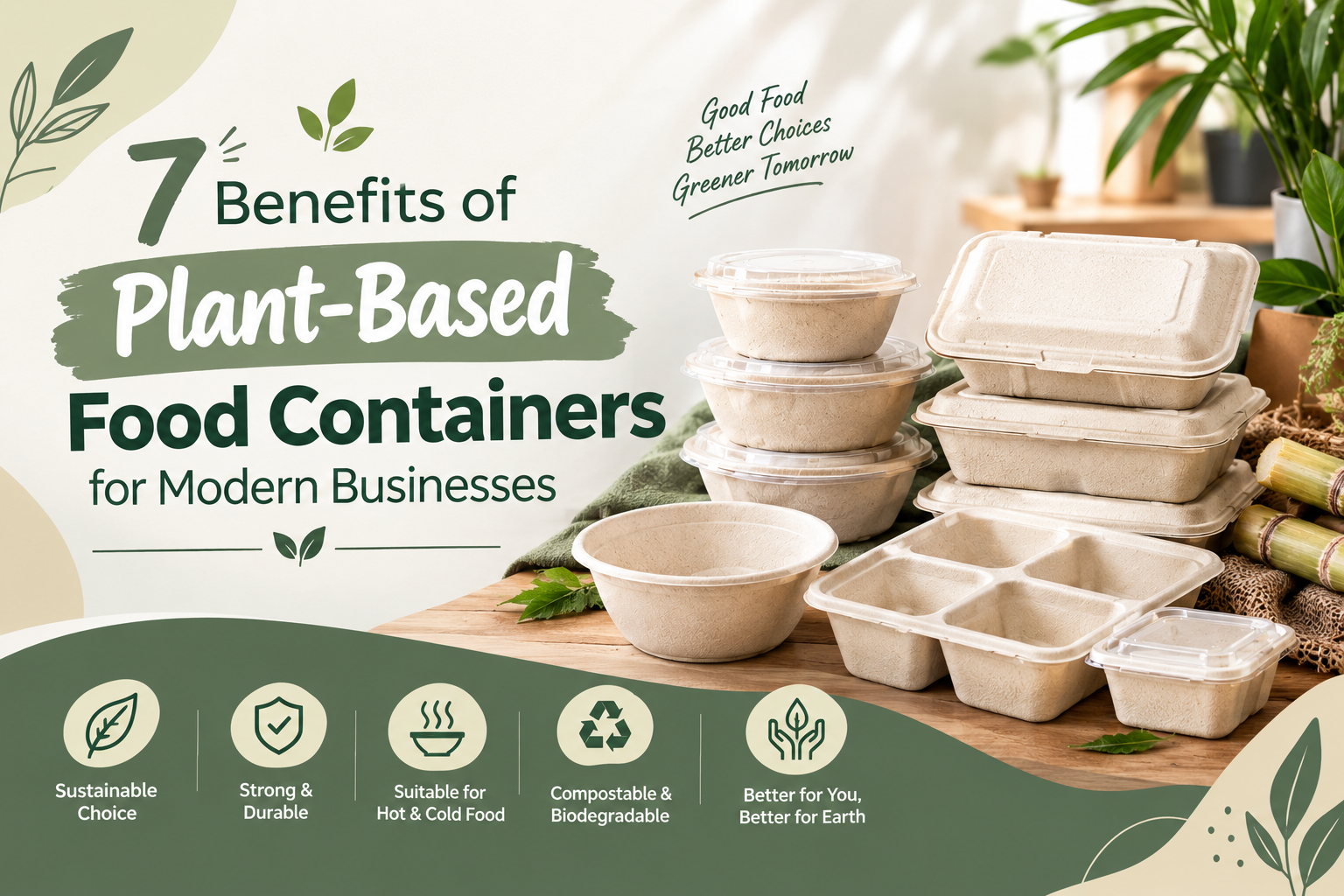
The food-service industry is changing as restaurants, cafés, hotels, catering companies, takeaway businesses, and food-delivery services look for practical packaging solutions that meet modern customer expectations. Packaging is an important part of the food-service experience because it protects meals, supports transportation, improves presentation, and makes food easier to serve.
Plant-Based Food Containers are one option businesses can consider when exploring alternatives to conventional disposable packaging. Depending on the product, these containers may be produced from materials such as sugarcane fiber, molded fiber, paper-based materials, or other plant-derived resources.
Choosing the right packaging requires more than simply selecting a product because it has a natural appearance. Businesses should consider the material, strength, food compatibility, temperature requirements, size, design, storage, certifications, and disposal instructions.
In this article, we explore seven important benefits of Plant-Based Food Containers and explain what modern food businesses should consider before choosing them.
What Are Plant-Based Food Containers?
Plant-Based Food Containers are food-service packaging products made partly or primarily from materials derived from plants or agricultural resources. Different manufacturers may use different materials and production methods, so product specifications can vary.
Sugarcane bagasse is one example of a plant-based fiber used to manufacture food-service products. Bagasse is the fibrous material remaining after sugarcane processing. It can be processed and molded into products such as bowls, plates, trays, and takeaway containers.
Other plant-derived materials can also be used in food packaging.
The exact performance of each product depends on its composition and manufacturing process. Therefore, businesses should always review product specifications and intended applications before purchasing.
1. Offers Alternative Material Choices
One of the main reasons businesses consider Plant-Based Food Containers is the availability of alternative packaging materials.
Food businesses use large quantities of disposable packaging every day. Restaurants, cafés, catering companies, and takeaway services may therefore want to explore different materials that fit their operational and sustainability objectives.
Plant-fiber products can provide an alternative for selected food-service applications.
Sugarcane bagasse is particularly useful because its fibers can be molded into different shapes and sizes. This makes it possible to manufacture plates, bowls, trays, and takeaway boxes from the material.
However, businesses should avoid assuming that all plant-based products have the same characteristics. Each product should be evaluated individually.
Important information to check includes:
- Material composition
- Food-contact suitability
- Product dimensions
- Temperature limitations
- Strength
- Certifications
- Recommended disposal method
Understanding the material helps businesses make more informed purchasing decisions.
2. Suitable for Different Food-Service Applications
Modern food businesses serve many different types of food. As a result, packaging needs can vary significantly.
Plant-Based Food Containers are available in different shapes, sizes, and designs, allowing businesses to choose products according to their menus.
For example, a restaurant may require containers for complete meals, while a café may need smaller packaging for bakery products, sandwiches, and snacks.
Catering companies may require plates and trays for large events, while food-delivery businesses may prioritize secure containers that are convenient to transport.
Potential applications include:
- Takeaway meals
- Restaurant delivery
- Salads
- Snacks
- Desserts
- Bakery products
- Catering meals
- Event food service
The right container should always be selected according to the food being served.
3. Supports Takeaway and Food Delivery
Takeaway and food delivery have become important services for many restaurants.
When food leaves the kitchen, packaging becomes responsible for protecting the meal during handling and transportation.
Plant-Based Food Containers can provide different options for takeaway businesses, depending on the specific product and its intended application.
A good takeaway container should be appropriately sized and strong enough for the food it carries. If a lid is included, the closure should also be appropriate for transportation.
Businesses should consider:
- Container strength
- Lid security
- Food portion
- Moisture
- Oil content
- Temperature
- Transportation time
- Ease of handling
Testing containers with actual menu items can help businesses determine whether a particular product is suitable.
For example, a container designed for dry food may have different requirements from one intended for meals containing sauces or liquids.
4. Available in Different Sizes and Designs
Another benefit of Plant-Based Food Containers is the variety of designs available for food-service applications.
Different foods require different packaging formats.
Bowls
Bowls can be suitable for salads, desserts, snacks, and selected meals.
Trays
Trays can be useful for catering, events, bakery products, and food presentation.
Takeaway Boxes
Boxes can be convenient for complete meals and delivery orders.
Compartment Containers
Compartment designs can help keep different food items separate.
Small Containers
Smaller containers can be useful for sauces, dips, toppings, and individual portions.
Businesses should select sizes based on their menu and portion requirements.
A container that is too small can make packing difficult, while an oversized container may create unnecessary empty space.
Correct sizing can improve food presentation, storage, and handling.
5. Can Support More Responsible Packaging Strategies
Packaging is one component of a broader business sustainability strategy.
Restaurants and food-service companies may already be working on reducing food waste, improving resource management, minimizing unnecessary packaging, or choosing more responsible suppliers.
Plant-Based Food Containers can be considered as part of this wider approach.
However, businesses should look at the complete lifecycle of a product rather than focusing only on the material.
The lifecycle can include:
Material Sourcing → Manufacturing → Transportation → Storage → Use → Disposal
Each stage can influence the overall environmental impact of a packaging product.
Businesses should also understand that terms such as plant-based, biodegradable, compostable, and recyclable have different meanings.
They should use accurate product information and avoid making environmental claims that cannot be supported.
6. Useful for Restaurants, Cafés, and Catering
Different businesses can use different types of packaging according to their operational needs.
Restaurants
Restaurants can use suitable containers for takeaway meals, salads, side dishes, desserts, and delivery orders.
Cafés
Cafés may require packaging for sandwiches, pastries, snacks, bakery items, and takeaway meals.
Catering Companies
Catering businesses can use plates, bowls, trays, and meal containers for events and large gatherings.
Hotels
Hotels may require food packaging for selected events, conferences, outdoor functions, and takeaway services.
Food-Delivery Businesses
Delivery businesses should focus on secure packaging, appropriate portion sizes, strength, and transportation performance.
For each business type, Plant-Based Food Containers should be selected according to the actual food and service conditions.
7. Can Improve Food Presentation
Packaging is part of the customer’s experience.
When customers order takeaway food, they see the container before they eat the meal. Clean, appropriately sized, and well-designed packaging can contribute to a professional presentation.
Natural fiber packaging can also complement businesses that want their visual identity to communicate a connection with natural materials.
However, appearance should never be the only consideration.
The packaging must also perform properly.
A container that looks attractive but cannot handle the intended food may create problems during delivery.
Businesses should therefore balance:
- Appearance
- Functionality
- Strength
- Size
- Food compatibility
- Transportation
- Storage
The right combination can create a better experience for both employees and customers.
Food Safety Is Essential
Food safety should always be a priority when choosing packaging.
Businesses should select products designed for food-contact applications and follow the manufacturer’s instructions.
Different foods can have different packaging requirements.
Hot meals, oily foods, sauces, acidic foods, chilled products, and dry snacks may require different packaging characteristics.
Before purchasing Plant-Based Food Containers, businesses should verify whether the product is appropriate for the intended food.
Temperature should also be considered.
If containers will be used with hot food, refrigerated products, frozen foods, or reheating applications, the manufacturer’s recommended temperature range should be checked.
A plant-based material should not automatically be assumed to be suitable for every temperature or food type.
Strength and Durability
A food container needs to perform properly during normal use.
Restaurants and delivery businesses should test whether containers can hold the required food portions without becoming unstable.
For catering companies, products may need to be stacked and transported in large quantities.
During product testing, businesses should examine:
- Rigidity
- Container capacity
- Lid performance
- Stackability
- Handling
- Transportation
- Food compatibility
Testing products before placing a large order can help businesses identify potential issues.
This is especially useful for businesses that serve a large number of takeaway customers every day.
Choosing the Correct Container Size
Size is an important part of packaging selection.
Businesses should choose containers according to their typical portion sizes.
If a restaurant offers small, medium, and large meal portions, it may need several container sizes.
Using the correct size can help improve presentation and reduce unnecessary empty space.
Businesses should also consider storage.
Containers that stack efficiently can help save space in busy restaurant kitchens and catering storage areas.
When choosing Plant-Based Food Containers, businesses should compare product dimensions with both their food portions and available storage space.
Storage and Inventory Planning
Packaging is often purchased in bulk, so inventory planning is important.
Before placing an order, businesses should estimate how many containers they use each week or month.
Consider:
- Average order volume
- Seasonal demand
- Available storage
- Container sizes
- Delivery schedules
- Minimum order quantities
Proper inventory management can help prevent packaging shortages while avoiding unnecessary stock.
For large catering businesses and restaurants, efficient storage can make daily operations easier.
Understanding Disposal Requirements
The final stage of the packaging lifecycle is disposal.
Businesses should understand exactly how their packaging should be handled after use.
Terms such as biodegradable, compostable, recyclable, and plant-based should not be treated as identical.
Some products may require specific processing facilities, while others may have different disposal instructions.
Before purchasing Plant-Based Food Containers, businesses should review the manufacturer’s disposal information.
They should also consider the waste-management facilities available in their local area.
For events and catering operations, clearly marked waste-collection points may help staff and customers manage used packaging appropriately.
Accurate disposal information is an important part of responsible packaging communication.
Test Before Purchasing in Bulk
One of the best ways to evaluate packaging is to test samples with actual food.
A product may look suitable in a catalogue or photograph but perform differently in a real kitchen.
During testing, businesses should check:
- Does the food fit properly?
- Is the container strong enough?
- Does the lid close securely?
- Does the food remain presentable?
- Is the packaging easy to handle?
- Does it work during transportation?
- Can the containers be stacked?
- Can employees pack food efficiently?
These tests can help businesses select products with greater confidence.
How Businesses Can Make Better Packaging Decisions
Businesses should avoid choosing packaging based on one factor alone.
Price is important, but it should be considered together with quality, performance, storage, and product suitability.
A slightly different container design may improve packing efficiency.
A stronger container may be more suitable for delivery.
A correctly sized container may improve presentation.
A product with clear documentation may make environmental communication easier.
When comparing Plant-Based Food Containers, businesses should therefore consider the total value of the product rather than simply looking at the purchase price.
Why Choose Inreign?
Inreign provides eco-friendly tableware and food-packaging solutions for modern commercial applications.
Restaurants, cafés, hotels, catering businesses, takeaway services, and food-delivery companies can explore packaging according to their specific requirements.
Selecting the right packaging involves understanding the food, portion size, transportation conditions, storage requirements, and disposal process.
Inreign focuses on practical food-service solutions that can help businesses explore alternative packaging options for their everyday operations.
Businesses should review individual product specifications before selecting products for commercial use.
Conclusion
Plant-Based Food Containers can provide useful packaging options for restaurants, cafés, catering companies, hotels, takeaway businesses, and food-delivery services.
Their plant-derived materials, variety of shapes and sizes, and suitability for different food-service applications make them worth considering for businesses exploring alternative packaging solutions.
However, choosing the right product requires careful evaluation.
Businesses should consider material, food safety, strength, temperature, size, design, storage, certifications, and disposal requirements before purchasing.
Testing samples with real menu items can also help businesses determine whether a particular container meets their operational requirements.
A responsible packaging strategy is not simply about selecting a container with a natural appearance. It involves understanding the product, using it correctly, managing inventory efficiently, and following appropriate disposal instructions.
By taking a thoughtful approach, businesses can select Plant-Based Food Containers that support practical food service while fitting into their wider packaging and sustainability objectives.



 by
by