
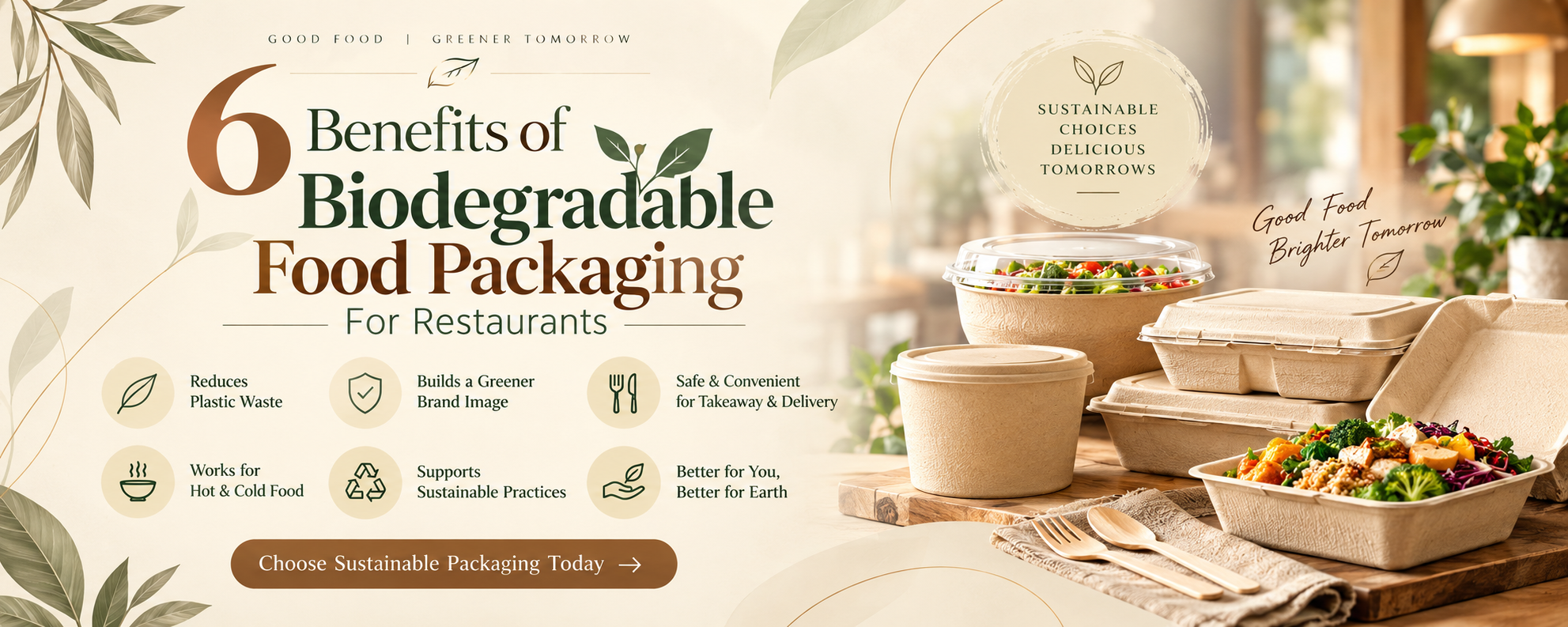
Restaurants are becoming more conscious of the packaging they use for takeaway meals, food delivery, catering, and daily operations. Customers increasingly notice whether a restaurant makes responsible choices, and packaging has become an important part of that experience. Biodegradable Food Packaging offers restaurants an opportunity to reduce their dependence on conventional plastic while creating a more environmentally responsible food-service system.
From takeaway boxes and meal trays to bowls, plates, and containers, Biodegradable Food Packaging can provide practical solutions for many types of restaurants. When selected carefully, it can combine functionality, presentation, and sustainability.
In this article, we explore six important benefits of Biodegradable Food Packaging and explain why it can be a useful choice for modern restaurants.
1. Helps Reduce Plastic Packaging Waste
One of the biggest reasons restaurants consider Biodegradable Food Packaging is the growing concern about single-use plastic waste. Takeaway businesses can use a large number of containers every day, and conventional plastic packaging can remain in the environment for a very long time.
Choosing Biodegradable Food Packaging made from suitable plant-based or natural materials can help restaurants move away from traditional disposable plastics. Materials such as bagasse, molded fiber, paper, and other plant-derived fibers can provide alternatives for many food-service applications.
For restaurants serving hundreds of takeaway meals every day, even a gradual transition to more responsible packaging can make a meaningful difference to their overall packaging strategy.
2. Supports a More Sustainable Restaurant Image
Customers do not only judge restaurants by the food. They also notice the overall experience, including packaging. Using Biodegradable Food Packaging can help restaurants demonstrate that sustainability is part of their business approach.
A restaurant that chooses environmentally considerate packaging can communicate a simple message: good food and responsible business practices can work together.
This can be especially useful for restaurants that already focus on fresh ingredients, locally sourced products, vegetarian menus, or other sustainability initiatives. Packaging can become another visible part of the restaurant’s brand identity.
However, restaurants should avoid making environmental claims that their packaging cannot support. Clear and accurate communication is important when promoting Biodegradable Food Packaging.
3. Provides Practical Options for Takeaway and Delivery
Packaging needs to do more than look environmentally friendly. It must protect food during handling, transportation, and delivery.
Modern Biodegradable Food Packaging is available in many different formats, including food boxes, bowls, plates, meal trays, and takeaway containers. This allows restaurants to choose packaging according to the type of food they serve.
For example, compartment trays can help separate different foods, while bowls can be useful for rice dishes, salads, noodles, and other meals. Lidded containers can also make takeaway service more convenient.
Restaurants should select packaging based on factors such as food type, temperature, moisture, portion size, storage requirements, and transportation distance.
4. Works Well With Modern Food-Service Needs
Restaurants often serve both hot and cold foods, so packaging performance is extremely important. Good Biodegradable Food Packaging should be selected according to the intended application rather than simply choosing a product because it is labeled biodegradable.
Plant-fiber packaging, including bagasse-based products, is commonly used for a variety of food-service applications. Depending on the specific product specifications, containers may be suitable for different hot or cold foods.
Restaurants should always check manufacturer instructions regarding temperature limits, microwave use, freezer use, oil resistance, moisture resistance, and food-contact suitability.
This practical approach helps restaurants choose Biodegradable Food Packaging that matches their daily requirements while maintaining food quality and presentation.
5. Creates a Better Presentation for Takeaway Meals
Food presentation is important even when customers are not eating inside the restaurant. A well-designed takeaway container can make meals look more organized and professional.
Biodegradable Food Packaging can provide a clean, natural appearance that works particularly well with restaurants that want an earthy or sustainability-focused visual identity.
Neutral fiber tones can complement colorful foods, fresh salads, vegetables, rice dishes, sandwiches, and other meals. Compartments can also keep different food items separated and make complete meals easier to organize.
For restaurants, this means packaging can become more than a protective layer. It can contribute to the customer’s overall impression of the food and brand.
6. Supports Long-Term Sustainable Business Goals
Sustainability is increasingly becoming part of long-term business planning. Restaurants are looking at ways to improve purchasing, reduce unnecessary waste, and make more responsible operational choices.
Switching to Biodegradable Food Packaging can be one part of a broader sustainability strategy.
A restaurant does not need to change everything at once. It can begin with takeaway boxes, meal trays, or food bowls and gradually review other disposable items. Businesses can also evaluate packaging suppliers based on material information, certifications where applicable, product performance, and disposal guidance.
This approach allows restaurants to make practical improvements without compromising their daily operations.
How Restaurants Can Choose the Right Packaging
Not every biodegradable container is suitable for every restaurant. Before purchasing Biodegradable Food Packaging, businesses should consider several important factors.
Food Type
Think about what will be placed inside the container. Dry foods, oily foods, sauces, soups, salads, and desserts can have different packaging requirements.
Temperature
Restaurants serving hot meals should check the manufacturer’s recommended temperature range. The same packaging may not be appropriate for every cooking, heating, or serving condition.
Size and Capacity
Choose containers that match actual serving sizes. Oversized packaging can waste material and storage space, while containers that are too small can affect food presentation.
Strength and Durability
Takeaway meals may be stacked, transported, and handled several times. Packaging should be strong enough for its intended use.
Lid and Closure
A secure lid can help prevent spills during delivery. Restaurants should test the complete container-and-lid combination rather than evaluating the container alone.
Disposal Instructions
The word “biodegradable” does not automatically mean that every product will break down in every environment. Restaurants should understand the disposal guidance for the specific product and communicate it accurately to customers when necessary.
Why Material Choice Matters
Many types of Biodegradable Food Packaging are available today, and their environmental characteristics can vary. Bagasse is one popular material used in molded-fiber food-service products.
Bagasse is the fibrous material left after sugarcane is processed for its juice. Instead of treating this agricultural residue only as waste, manufacturers can process the fiber into products such as plates, bowls, trays, and food containers.
This makes bagasse an interesting material for restaurants looking for plant-fiber packaging options.
Other materials may include paperboard, molded fiber, bamboo fiber, or other plant-based materials. Restaurants should compare products based on their actual specifications and end-of-life requirements rather than relying only on general sustainability labels.
Biodegradable Packaging and Customer Expectations
Customer expectations are changing, particularly in food delivery and takeaway services. People increasingly want convenient meals without unnecessary packaging.
Restaurants that adopt Biodegradable Food Packaging can make sustainability more visible throughout the customer journey. From the moment a takeaway order leaves the kitchen to the moment it reaches the customer’s table, packaging becomes part of the brand experience.
A simple, clean container can reinforce a restaurant’s commitment to responsible choices. When combined with sensible portioning, reduced unnecessary packaging, and appropriate disposal practices, it can contribute to a broader waste-reduction strategy.
Making the Switch Step by Step
Moving toward Biodegradable Food Packaging does not have to happen overnight. Restaurants can start by identifying their most frequently used disposable items.
For example, a business might first replace takeaway meal trays. After testing their performance, it could introduce suitable bowls, plates, or food boxes.
During the transition, restaurants should monitor:
- Packaging performance
- Food leakage
- Customer feedback
- Storage requirements
- Supplier consistency
- Product availability
- Cost per serving
- Disposal requirements
This information can help businesses make better purchasing decisions and avoid selecting packaging based only on appearance or marketing claims.
Conclusion
Biodegradable Food Packaging can offer restaurants a practical way to explore more sustainable alternatives to conventional disposable packaging. Its benefits can include reducing reliance on traditional plastics, supporting a sustainability-focused brand image, providing useful takeaway formats, improving food presentation, and contributing to long-term environmental goals.
The best packaging choice depends on the restaurant’s menu, operating conditions, budget, storage capacity, and disposal infrastructure. Businesses should always review product specifications and choose packaging designed for their particular food-service requirements.
For restaurants looking toward a more responsible future, Biodegradable Food Packaging can be an important part of a broader approach to sustainable food service. With thoughtful product selection and responsible disposal practices, restaurants can balance convenience, performance, customer expectations, and environmental considerations.



 by
by