
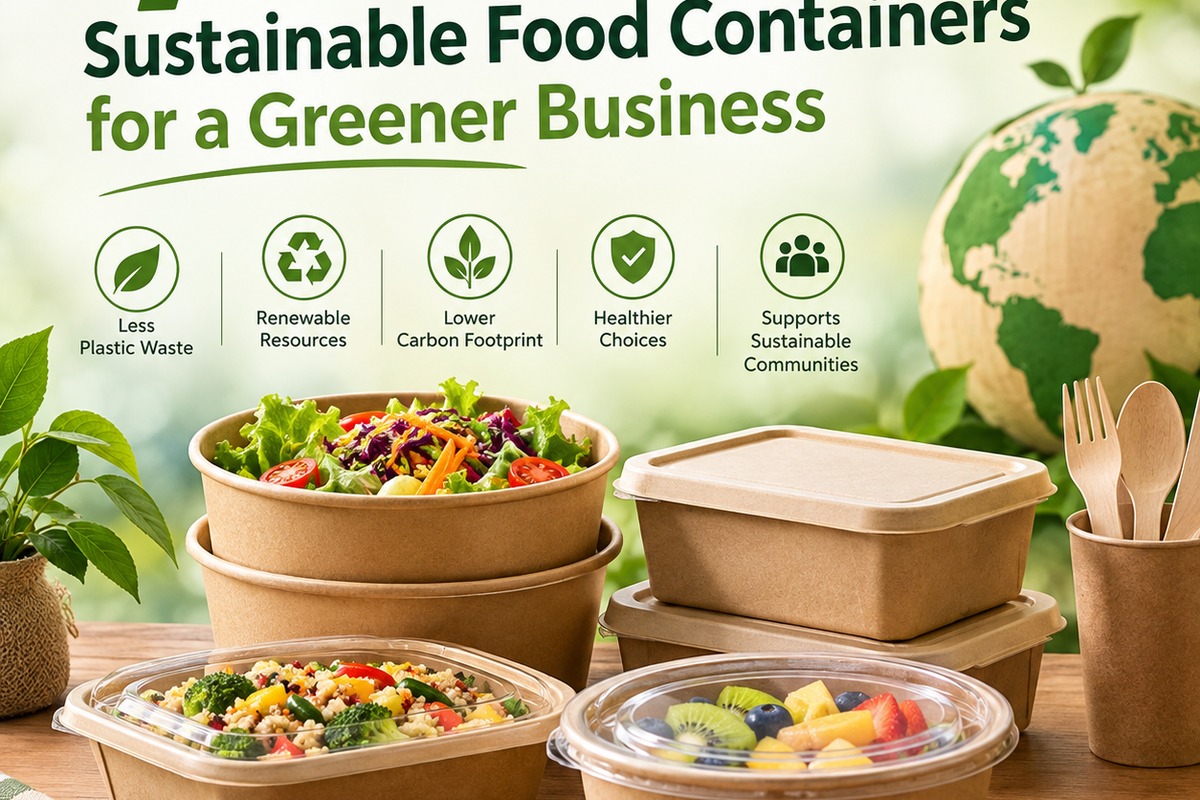
Businesses in the food industry are paying more attention to the way food is prepared, served, packed, and delivered. As takeaway and delivery services continue to grow, food containers have become an important part of daily restaurant operations. Choosing the right packaging can influence food presentation, customer convenience, storage, transportation, and a business’s approach to sustainability.
Sustainable Food Containers provide businesses with an option to move away from packaging choices that rely heavily on conventional materials. Depending on the product, sustainable containers may be made using plant fibers, recycled materials, renewable resources, or other materials designed with environmental considerations in mind.
For restaurants, cafés, caterers, cloud kitchens, food manufacturers, and takeaway businesses, packaging needs to do more than simply hold food. It should be practical, reliable, attractive, and suitable for the type of food being served.
Here are seven important reasons businesses can consider Sustainable Food Containers for their food-service operations.
1. Supports More Responsible Packaging Choices
One of the biggest reasons businesses explore Sustainable Food Containers is to make more responsible packaging decisions. Traditional disposable packaging can create significant waste when used at high volumes, especially in takeaway and delivery businesses.
Restaurants may use hundreds or even thousands of containers every month. Making a change in packaging can therefore become one part of a broader effort to improve how a business manages its environmental impact.
Sustainable packaging can include products made from materials such as bagasse, paper, cardboard, molded fiber, and other renewable or recycled resources. The exact environmental benefits depend on the material, manufacturing process, transportation, and disposal system.
Businesses should therefore look beyond marketing claims and understand the material used in each product.
Choosing Sustainable Food Containers can be a practical step for businesses that want their packaging decisions to better reflect their sustainability objectives.
2. Helps Reduce Reliance on Conventional Plastic
Plastic has traditionally been used for many food-service applications because it is lightweight, inexpensive, and easy to manufacture. However, businesses looking for alternatives may consider packaging made from other materials.
Sustainable Food Containers can provide options for replacing some conventional disposable plastic products. Depending on the application, businesses may choose fiber-based trays, paper food boxes, molded-fiber bowls, or other alternatives.
For example, a restaurant may use a fiber meal tray for a complete takeaway meal instead of a conventional plastic tray. A café may choose paper-based containers for selected food items, while a catering company may use molded-fiber serving trays.
The right choice depends on the food and operational requirements.
Businesses should also remember that replacing plastic with another material does not automatically make a product environmentally superior in every situation. Material sourcing, production, transportation, reuse, recycling, composting, and disposal all matter.
3. Offers Practical Options for Restaurants
Packaging must work in a busy commercial kitchen. Staff need containers that are easy to store, fill, close, stack, and transport.
Modern Sustainable Food Containers are available in many different shapes and sizes, giving restaurants flexibility when designing their takeaway packaging system.
Meal trays can be useful for complete meals with multiple portions. Bowls can be used for soups, salads, rice dishes, noodles, desserts, and snacks. Food boxes can work well for burgers, sandwiches, fried foods, and takeaway meals.
Compartment containers can also help separate different food items within one package. This can be especially useful for Indian meals, combo meals, catering portions, and lunch boxes.
When selecting Sustainable Food Containers, businesses should consider the actual requirements of their menu rather than choosing packaging based only on appearance.
4. Improves Takeaway and Delivery Presentation
Food presentation does not stop when a customer leaves a restaurant. For takeaway and delivery businesses, packaging becomes part of the customer experience.
A well-designed container can help keep different foods organized and make the meal look neat when the customer opens the package.
Sustainable Food Containers can be available in clean, natural-looking designs that complement restaurants focused on modern and environmentally conscious branding.
For businesses using delivery platforms, packaging also provides an opportunity to create a consistent presentation. Containers, sleeves, labels, and other packaging elements can work together to create a recognizable brand experience.
Good presentation does not require complicated packaging. A simple, well-designed container can provide a professional appearance while remaining practical for everyday use.
5. Can Support a Stronger Brand Image
Customers increasingly notice the choices businesses make. Packaging is visible and can become one of the simplest ways for a restaurant to communicate its approach to sustainability.
Using Sustainable Food Containers can help a business demonstrate that it has considered alternatives when selecting its food-service packaging.
For example, a restaurant can communicate factual information about its packaging materials through labels, website content, menus, or social media. Businesses should make sure that any environmental claims are accurate and supported by supplier information.
A sustainable packaging strategy can also complement other responsible business practices, such as reducing food waste, improving energy efficiency, sourcing ingredients responsibly, and minimizing unnecessary packaging.
The packaging itself is only one part of a larger brand story.
6. Suitable for Different Food-Service Businesses
Another advantage of Sustainable Food Containers is their versatility. Different businesses have different packaging requirements, and there is no single container that works for every operation.
Restaurants
Restaurants can use takeaway boxes, meal trays, bowls, and containers for delivery orders.
Cafés
Cafés may need containers for sandwiches, salads, desserts, snacks, and takeaway meals.
Cloud Kitchens
Cloud kitchens can benefit from packaging that is easy to store, organize, and use quickly during high-volume order periods.
Catering Companies
Caterers often require larger meal trays and compartment containers that can organize complete meals for events.
Food Trucks
Food trucks need compact packaging that is easy to handle while serving customers in a fast-paced environment.
Hotels
Hotels can use appropriate takeaway packaging for room service, events, cafés, and food delivery operations.
Because of these different applications, Sustainable Food Containers can be incorporated into many types of food-service operations.
7. Supports Long-Term Sustainability Goals
Sustainability is usually not achieved through one single change. Businesses often need to make improvements across purchasing, production, energy consumption, transportation, waste management, and packaging.
Choosing Sustainable Food Containers can be one part of this wider strategy.
A restaurant may begin by replacing selected disposable products and then gradually review other packaging items. Over time, the business can evaluate which containers perform well, which materials are accepted by local waste systems, and where packaging can be reduced.
Businesses can also look at packaging size. Oversized containers may use more material than necessary and can take up additional storage space. Selecting appropriately sized packaging can help create a more efficient system.
The goal should be a balanced packaging strategy that considers sustainability as well as performance and cost.
How to Choose the Right Sustainable Food Containers
Choosing Sustainable Food Containers requires more than simply looking for an eco-friendly label. Businesses should evaluate several practical factors before placing a large order.
Check the Material
Start by understanding what the container is made from. Ask suppliers for clear information about the material and its source.
Common options may include bagasse, molded fiber, paper, cardboard, recycled materials, or other plant-based materials.
Understanding the material helps businesses communicate accurate information to customers.
Consider the Food Type
Different foods require different packaging characteristics.
Hot foods may require containers designed for higher temperatures. Wet or oily foods may require appropriate resistance to moisture and grease. Foods with sauces may need secure closures to prevent leakage.
The container should be tested with the actual food before being used on a large scale.
Look at Durability
A sustainable container still needs to perform well.
Restaurants should check whether containers remain stable during filling, stacking, transportation, and serving.
Weak packaging can lead to spills, damaged meals, and customer complaints, so durability should always be considered alongside environmental goals.
Consider Storage Space
Restaurant kitchens often have limited storage space.
Stackable Sustainable Food Containers can help businesses organize packaging efficiently. Standardized sizes can also make inventory management easier.
Before ordering large quantities, businesses should check container dimensions and determine how many units can comfortably fit within their available storage area.
Check Disposal Information
The environmental outcome of packaging depends partly on what happens after use.
Some products may be recyclable, while others may be compostable under specific commercial conditions. Some biodegradable materials may require particular environmental conditions to break down effectively.
Businesses should therefore understand the supplier’s disposal instructions and consider the waste-management facilities available in their area.
Consider the Customer Experience
Packaging should be convenient for customers.
Containers should ideally be easy to open, carry, store, and dispose of. For delivery meals, secure lids can help protect the food during transportation.
Customers should be able to enjoy the meal without struggling with complicated packaging.
Why Packaging Design Matters
The appearance of Sustainable Food Containers can also influence the overall presentation of a food business.
Natural colors, simple shapes, clean surfaces, and minimal packaging can create a modern appearance. Businesses can add branding through stickers, labels, sleeves, or printed packaging where appropriate.
However, design should not come at the expense of functionality.
A beautiful container that leaks or breaks during delivery can negatively affect the customer experience. Good packaging design combines appearance with practical performance.
Building a More Sustainable Packaging Strategy
Businesses do not necessarily need to replace every packaging product at once. A gradual approach can make the transition easier.
Start by identifying the packaging products used most frequently. Next, compare available alternatives based on material, price, performance, storage requirements, and disposal options.
Businesses can test Sustainable Food Containers with selected menu items before introducing them across the entire operation.
Customer feedback can also be useful. Restaurants can monitor whether customers find the containers convenient and whether delivery orders arrive in good condition.
At the same time, businesses can track packaging consumption to identify opportunities to reduce unnecessary use.
Final Thoughts
Food packaging plays an important role in modern restaurant and food-service operations. It protects food, supports transportation, affects presentation, and contributes to the overall customer experience.
Sustainable Food Containers give businesses an opportunity to explore packaging alternatives while considering broader environmental objectives. They can be used across restaurants, cafés, catering businesses, cloud kitchens, hotels, and food-delivery operations.
The right packaging choice should balance several factors, including material, durability, food compatibility, storage, appearance, cost, customer convenience, and end-of-life options.
Rather than choosing packaging based on one environmental claim, businesses should look at the complete picture. Understanding the material, asking suppliers for accurate information, testing products with real menu items, and considering local disposal systems can help businesses make more informed packaging decisions.
For businesses planning to improve their packaging strategy, Sustainable Food Containers can be an important part of a broader approach to responsible food-service operations. With thoughtful selection and practical implementation, businesses can work toward packaging systems that support their operational needs while reflecting their sustainability goals.



 by
by