
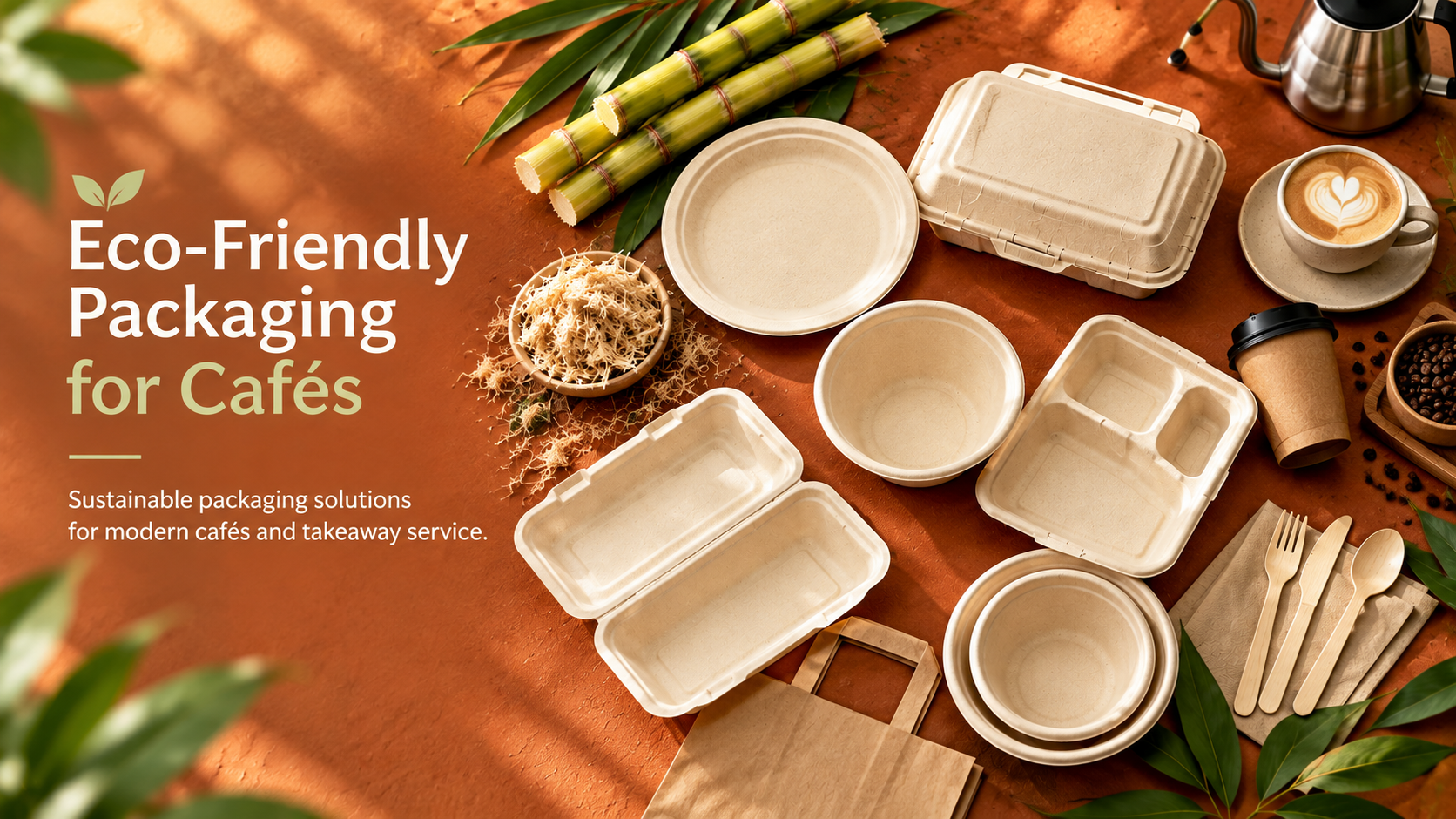
Cafés are no longer focused only on great coffee, food, and customer service. Packaging has also become an important part of the customer experience. As takeaway orders, food delivery, and grab-and-go meals continue to grow, cafés need packaging that protects food while supporting responsible business practices. Choosing Eco-Friendly Packaging for Cafés can help businesses create a more sustainable packaging system without compromising convenience, presentation, or functionality.
From takeaway coffee cups and food containers to bowls, trays, and lids, there are many packaging options available today. However, choosing the right material depends on the type of food or beverage being served, the expected usage, durability requirements, and disposal facilities available in the area.
Why Cafés Need Better Packaging Solutions
Packaging is used every day in cafés. A single business may require cups for coffee, containers for sandwiches, boxes for bakery products, bowls for salads, trays for meals, and takeaway containers for delivery orders. When these products are used at high volumes, material selection becomes an important business consideration.
Eco-Friendly Packaging for Cafés can provide an alternative to conventional packaging by using materials such as bagasse, paper, molded fiber, and other plant-based materials. These options can be designed for different food-service applications while offering a more environmentally conscious approach to takeaway packaging.
For café owners, the goal should not simply be to replace one product with another. Instead, businesses should consider the complete packaging requirement and select products according to food type, temperature, transportation, storage, and end-of-life considerations.
1. Bagasse Food Containers
Bagasse is a material made from the fibrous residue left after sugarcane processing. Instead of treating this agricultural residue only as waste, it can be processed into molded food-service products.
Bagasse containers are available in several shapes and sizes, including meal boxes, clamshell containers, bowls, plates, and compartment trays. They are particularly useful for cafés serving sandwiches, rice meals, snacks, salads, and takeaway dishes.
One major reason businesses consider Eco-Friendly Packaging for Cafés is the availability of plant-based packaging options such as bagasse. The containers can provide a practical solution for takeaway service while giving cafés an opportunity to move away from conventional plastic-based food packaging.
When selecting bagasse containers, cafés should check product specifications, food-contact suitability, temperature limitations, lid compatibility, and disposal requirements.
2. Compostable Food Containers
Compostable containers are another packaging option for cafés. Depending on the material and certification, these products may be designed to break down under specific composting conditions.
Compostable packaging can be useful for businesses that already have access to suitable commercial composting or waste-management systems. However, cafés should avoid assuming that every product labeled “compostable” will break down in a home composting environment.
When selecting Eco-Friendly Packaging for Cafés, it is important to look beyond marketing claims. Check certifications, material information, recommended disposal conditions, and supplier documentation.
This helps café owners choose packaging based on verified product characteristics rather than simply choosing products because they carry an environmental label.
3. Paper-Based Packaging
Paper and paperboard packaging can work well for many café applications. Bakery boxes, sandwich boxes, paper bags, sleeves, cartons, and food trays are commonly used in takeaway service.
Paper packaging can be particularly useful when cafés want simple packaging for dry or relatively low-moisture products. It can also provide a clean surface for branding and product presentation.
For Eco-Friendly Packaging for Cafés, cafés can consider responsibly sourced paper products and packaging that minimizes unnecessary coatings or mixed materials. The exact suitability depends on the food being packed and the construction of the product.
For example, a bakery may require a simple paper box, while a café serving oily or moist foods may need a specialized food-grade barrier.
4. Molded Fiber Bowls and Trays
Molded fiber products are designed using plant-based fibers that are formed into useful shapes. These can include bowls, trays, plates, meal containers, and other food-service products.
Molded fiber packaging can be a good choice for cafés that serve salads, breakfast meals, snacks, desserts, or combination meals. Compartment trays can also help separate different foods within a single container.
A major advantage of Eco-Friendly Packaging for Cafés is that cafés can create a consistent packaging range rather than relying on one container for every application.
For example, a café could use bowls for salads, trays for complete meals, smaller containers for desserts, and clamshell boxes for takeaway items.
5. Sustainable Coffee Cups and Lids
Coffee is one of the most important products for many cafés, making beverage packaging equally important. Takeaway coffee cups should be selected based on heat resistance, leakage protection, lid fit, insulation, and customer convenience.
Paper-based cups can be considered as part of a broader sustainable packaging strategy. However, cafés should carefully examine the cup construction because some paper cups contain additional barrier materials.
The same applies to lids. A sustainable cup paired with an unsuitable lid may still create a packaging system with multiple material types that can complicate disposal.
Therefore, when developing Eco-Friendly Packaging for Cafés, businesses should evaluate cups and lids together rather than selecting each product separately.
6. Sustainable Takeaway Boxes
Takeaway boxes are essential for cafés that serve sandwiches, wraps, burgers, pastries, snacks, and prepared meals.
A good takeaway box should protect the product during transport while being easy for staff to assemble and customers to open. It should also provide enough space without using excessive material.
Choosing Eco-Friendly Packaging for Cafés can help businesses review whether their takeaway boxes are appropriately sized for their products. Right-sized packaging can reduce unnecessary material use and may also improve storage efficiency.
Cafés should consider stackability, ventilation, grease resistance, strength, and closure design before selecting takeaway boxes.
7. Eco-Friendly Food Trays
Food trays are useful for cafés offering combination meals, breakfast sets, snacks, or catering portions. Compartment trays can keep different food items separated and organized.
Plant-fiber trays can provide a practical alternative to certain conventional food-service trays. They can also create a consistent appearance across takeaway and catering menus.
For cafés developing Eco-Friendly Packaging for Cafés, trays should be selected according to the portion size and food characteristics. A tray designed for dry snacks may not be appropriate for a hot, moist meal.
8. Sustainable Packaging for Bakery Products
Cafés that sell cakes, cookies, pastries, muffins, and other bakery items need packaging that protects delicate products.
Paperboard bakery boxes are commonly suitable for many dry bakery products. Windowed boxes can also help customers see the product, although cafés should check whether the window uses a different material that affects disposal.
For Eco-Friendly Packaging for Cafés, bakery packaging should balance visibility, protection, presentation, and material simplicity.
A well-designed bakery box can also become part of the café’s branding. Simple printing, natural textures, and minimal designs can communicate a clean and thoughtful packaging identity.
9. Sustainable Packaging for Food Delivery
Food delivery creates additional packaging challenges. Containers must handle transportation, temperature changes, movement, and potential spills.
Cafés should choose containers with secure closures and suitable strength. Soups, sauces, salads, sandwiches, and hot meals may all require different packaging formats.
Eco-Friendly Packaging for Cafés should therefore be selected according to actual delivery requirements rather than using one universal container.
Businesses should test packaging before introducing it across their full delivery menu. A practical test can include filling the container, closing it, transporting it, checking for leakage, and evaluating the food condition after delivery.
10. Consider the Complete Packaging System
Choosing individual sustainable products is only one part of the process. Cafés should also consider how containers, lids, cups, bags, napkins, cutlery, and other accessories work together.
For example, a café may choose plant-based containers but continue using unnecessary plastic accessories. A more complete approach looks at the entire takeaway order.
This is where Eco-Friendly Packaging for Cafés becomes a broader packaging strategy rather than a single product purchase.
Cafés can review their packaging inventory and identify products that are used most frequently. They can then prioritize improvements in areas where packaging volume is highest.
How to Choose the Right Packaging
Before purchasing packaging, café owners should consider several practical questions:
- What type of food will be packed?
- Will the food be hot, cold, dry, oily, or liquid?
- How long will the food remain inside the container?
- Will the product be delivered or consumed immediately?
- Does the container need a lid?
- Is the packaging easy for staff to store and handle?
- Is it suitable for the café’s disposal system?
- Does the supplier provide material and certification information?
- Does the packaging size match the food portion?
- Can the packaging support the café’s branding?
These questions can make selecting Eco-Friendly Packaging for Cafés much easier.
Benefits for Café Businesses
Sustainable packaging can offer benefits beyond environmental considerations. A well-planned packaging range can improve organization, create a consistent customer experience, and support a café’s overall brand identity.
Customers increasingly notice how businesses present takeaway products. Neat containers, appropriate portion sizes, secure lids, and attractive presentation can contribute to a positive experience.
At the same time, businesses should avoid making environmental claims that cannot be supported. If packaging is described as biodegradable, compostable, recyclable, or plant-based, the café should have accurate information from the manufacturer or supplier.
This makes Eco-Friendly Packaging for Cafés not only a packaging choice but also an opportunity for businesses to communicate sustainability responsibly.
Making the Switch Step by Step
Cafés do not necessarily need to replace every packaging product at once. A gradual approach can be more practical.
Start by reviewing the highest-volume packaging products. For many cafés, this may include coffee cups, takeaway containers, sandwich boxes, and food bowls.
Next, compare available materials and suppliers. Check specifications, minimum order quantities, storage requirements, certifications, and pricing.
Then test selected products with staff and customers. Check how easily containers close, how they perform with different foods, and how they handle takeaway transportation.
After testing, the café can create a standardized packaging range.
This step-by-step approach allows Eco-Friendly Packaging for Cafés to become part of normal business operations without unnecessarily disrupting service.
Conclusion
Choosing better packaging is an important step for cafés looking to build more responsible takeaway and delivery systems. From bagasse containers and molded fiber trays to paper boxes, sustainable cups, bowls, and takeaway packaging, businesses have several options to explore.
The best choice depends on the café’s menu, operating model, budget, storage space, customer needs, and local waste-management facilities. There is no single packaging material that works perfectly for every café or every food item.
By evaluating packaging carefully, testing products, and selecting suitable materials for specific applications, cafés can create a practical and consistent packaging system.
Eco-Friendly Packaging for Cafés can support businesses that want to reduce reliance on conventional packaging while maintaining convenience and presentation. With thoughtful product selection and responsible communication, cafés can make packaging a meaningful part of their broader sustainability approach.
For modern cafés, the journey toward better packaging can begin with simple changes: choose the right material, avoid unnecessary packaging, use appropriately sized containers, and work with reliable suppliers. Over time, these individual choices can help create a more organized, efficient, and sustainability-focused food-service experience.



 by
by