
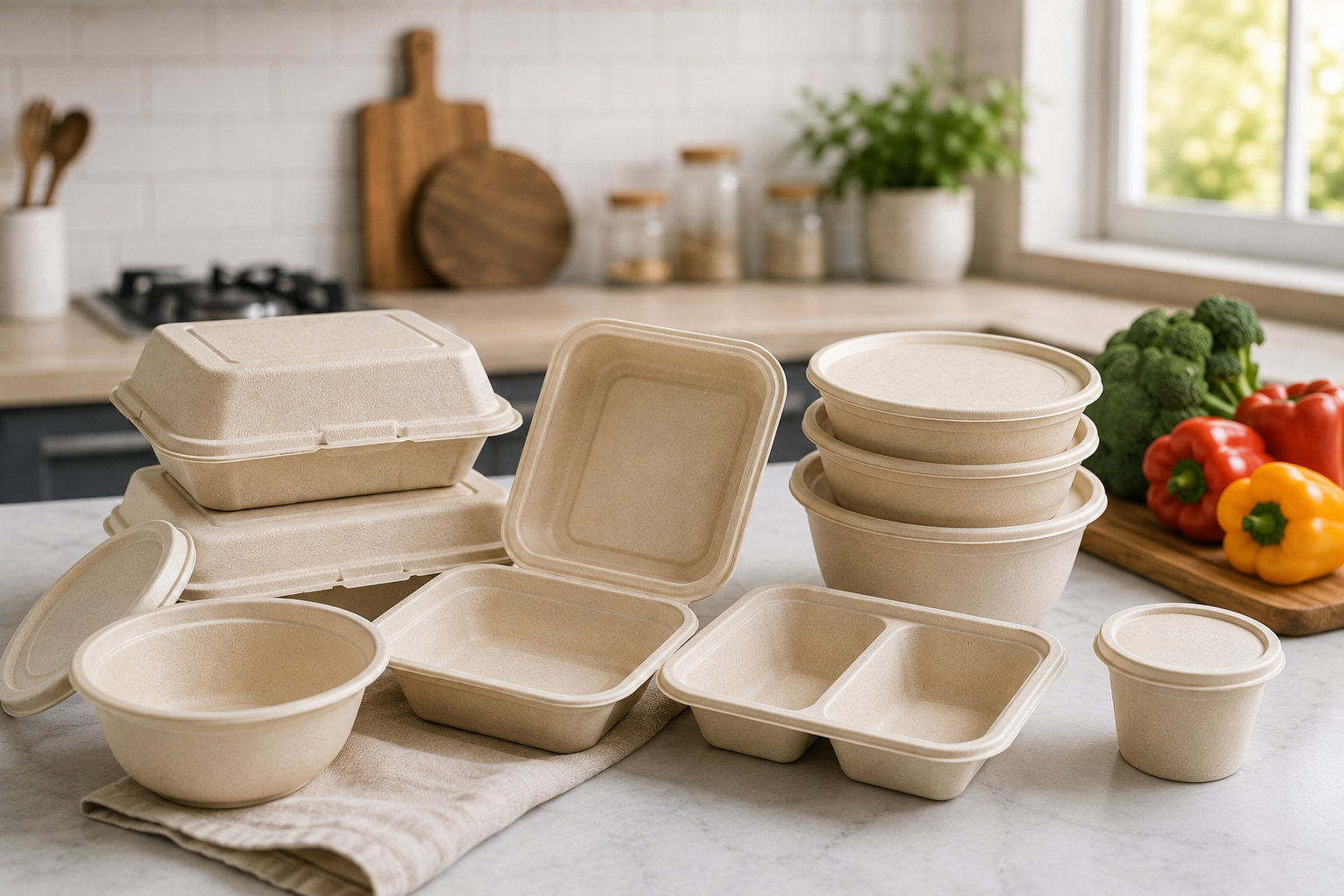
Choosing the right Eco-Friendly Food Containers is an important decision for restaurants, cafés, catering companies, hotels, takeaway businesses, food-delivery services, and event organizers. Food packaging needs to protect meals, support convenient handling, maintain presentation, and meet the practical requirements of everyday food service. At the same time, many businesses are looking for packaging options that better align with their sustainability goals.
However, choosing environmentally responsible packaging should involve more than simply selecting a product labeled “eco-friendly.” Different containers are made from different materials and have different performance characteristics, certifications, temperature limits, and disposal requirements. Understanding these factors can help businesses make better purchasing decisions.
From material selection and durability to food safety, size, design, and end-of-life management, several factors should be considered before choosing packaging. This guide explains five important things businesses should evaluate when selecting Eco-Friendly Food Containers for their operations.
Why Choosing the Right Food Container Matters
Food containers play an important role in the food-service industry. They are used to store, serve, transport, and protect food. A poorly selected container can affect food presentation, cause leakage, create storage problems, or make transportation more difficult.
For takeaway and delivery businesses, packaging becomes even more important because food may travel from the kitchen to the customer for several minutes or hours. Containers must be appropriate for the type of food and conditions in which they will be used.
Businesses also need to consider purchasing quantities, storage space, supplier reliability, and disposal options.
Choosing suitable Eco-Friendly Food Containers can help businesses balance functionality with more responsible material choices.
1. Check the Material
The first thing to consider is the material used to manufacture the container.Material should be the first consideration when selecting Eco-Friendly Food Containers.
Different types of sustainable packaging may be made from plant fibers, paper-based materials, sugarcane bagasse, or other materials. Each material has its own characteristics and applications.
Sugarcane Bagasse
Sugarcane bagasse is a popular plant-fiber material used in food-service products. Bagasse is the fibrous material left after sugarcane is processed.
These fibers can be processed and molded into plates, bowls, trays, takeaway containers, and other food-service products.
For businesses interested in plant-based packaging, bagasse can be an attractive option.
Paper-Based Materials
Paper and fiber-based packaging can also be used for various food-service applications. These products may be suitable for takeaway meals, bakery products, snacks, and other applications depending on their construction and specifications.
Plant-Based Materials
Some packaging products use renewable plant-based resources as an alternative to certain conventional materials.
However, businesses should avoid assuming that every plant-based product has identical environmental characteristics. The actual material composition, manufacturing process, certifications, and disposal requirements should always be reviewed.
When selecting Eco-Friendly Food Containers, businesses should ask suppliers for clear information about the material and intended application.
2. Consider Strength and Durability
The second important factor is strength.
A food container may look attractive and environmentally responsible, but it still needs to perform properly during normal use.
Restaurants, caterers, and delivery businesses need containers that can handle food safely during serving and transportation.
Consider the following questions:
- Can the container hold the intended portion?
- Is it strong enough for transportation?
- Can it be stacked safely?
- Is it suitable for the type of food being served?
- Does the design provide enough support during handling?
- Is the lid or closure secure where required?
For takeaway meals, container strength is particularly important. Customers expect food to arrive in good condition without containers collapsing or becoming difficult to handle.
Catering companies may also require stronger packaging because products are transported and distributed in large quantities.
The best Eco-Friendly Food Containers should therefore be selected according to actual operating conditions rather than appearance alone.
3. Check Food Safety and Temperature Requirements
Food safety should always be a priority when selecting packaging.
Businesses should ensure that their chosen containers are designed for food-contact applications and are appropriate for the intended food.
Different meals have different requirements. Hot food, cold food, oily dishes, sauces, desserts, salads, and dry snacks may interact differently with packaging materials.
Temperature is another important consideration.
Some containers may be suitable for hot food, while others may have specific temperature limitations. Businesses should check manufacturer specifications before using containers with hot, chilled, frozen, or reheated foods.
For example, a container designed for a dry snack should not automatically be assumed to be suitable for a hot meal containing liquid or sauce.
Businesses should also consider whether containers will be used in refrigerators, freezers, microwave ovens, or other environments. Only use products in these conditions when the manufacturer specifically confirms that they are suitable.
Selecting Eco-Friendly Food Containers based on food safety and performance requirements can help businesses avoid operational problems and protect the customer experience.
4. Choose the Right Size and Design
Size is another factor that is sometimes overlooked.
A food container should match the portion size and type of food being served.
Using a container that is too large can create unnecessary empty space and may affect presentation. A container that is too small may make food difficult to pack and can lead to spills.
Businesses should consider:
Portion Size
Select containers according to the typical portion sizes on the menu.
Shape
Different foods may work better with round, rectangular, square, or compartment-style containers.
Depth
Bowls and deeper containers can be useful for foods that contain sauces or liquids, while shallow containers may be suitable for dry foods and snacks.
Compartments
Divided containers can help keep different foods separate. They may be useful for combination meals, catering, and takeaway services.
Lids
If food will be transported, an appropriate lid can help protect the contents and make handling easier.
Stackability
Restaurants and catering companies often store large quantities of packaging. Containers that stack efficiently can help businesses make better use of storage space.
When choosing Eco-Friendly Food Containers, design should be evaluated alongside material and performance.
5. Understand Disposal and Environmental Claims
The final factor is one of the most important: what happens after the container has been used?
Terms such as biodegradable, compostable, recyclable, and sustainable do not necessarily mean the same thing.
A product may have specific disposal requirements depending on its material and certification.
Some compostable food-service products, for example, may be intended for commercial composting facilities rather than ordinary household composting.
Businesses should therefore understand the disposal pathway before purchasing large quantities.
Check Product Information
Read the manufacturer’s disposal instructions and environmental claims carefully.
Understand Local Facilities
Find out whether suitable recycling or composting facilities are available in the area where the products will be used.
Provide Clear Waste Bins
Restaurants, events, and catering businesses can help customers and staff dispose of used packaging correctly by providing clearly marked collection bins.
Avoid Unsupported Claims
Businesses should not claim that a product is “100% environmentally friendly” without appropriate evidence. Clear and accurate communication helps build customer trust.
Responsible disposal is an important part of choosing Eco-Friendly Food Containers.
Benefits of Choosing Suitable Eco-Friendly Containers
Once businesses understand the important selection factors, they can identify packaging that fits their specific requirements.
Better Customer Experience
Good packaging can make takeaway and delivery meals easier to transport and consume.
Customers appreciate containers that are easy to open, stable, appropriately sized, and suitable for the food they have ordered.
Improved Food Presentation
Packaging is part of the overall customer experience.
Clean and well-designed containers can make meals look more attractive and organized.
Support for Sustainability Goals
Selecting plant-based or other environmentally considered packaging can become part of a company’s broader sustainability strategy.
Businesses can combine packaging improvements with other initiatives such as reducing food waste, minimizing unnecessary packaging, improving recycling, and optimizing inventory.
Convenient Food Service
Suitable containers can simplify food preparation, serving, takeaway, and delivery operations.
This is especially important for businesses handling high order volumes.
Eco-Friendly Food Containers for Different Businesses
Different industries have different packaging requirements.
Restaurants
Restaurants can use suitable containers for takeaway meals, side dishes, desserts, salads, and delivery orders.
Cafés
Cafés may need packaging for sandwiches, snacks, bakery products, salads, and takeaway meals.
Catering Companies
Caterers can select plates, bowls, trays, and containers according to event size and menu requirements.
Hotels
Hotels can use suitable food containers for events, outdoor functions, takeaway services, and selected hospitality applications.
Food Delivery Businesses
Delivery companies and restaurants should prioritize container strength, secure closures, food compatibility, and transportation performance.
Event Organizers
Events may require large quantities of disposable products. Organizers should plan purchasing, storage, serving, and waste collection in advance.
The goal is to choose Eco-Friendly Food Containers that combine suitable environmental characteristics with the practical strength required by your operation.
How to Compare Different Products
Before purchasing Eco-Friendly Food Containers, businesses can create a simple comparison checklist.
Consider:
Material:
What is the product made from?
Size:
Does it match your food portions?
Strength:
Can it handle your food and transportation requirements?
Temperature:
Is it appropriate for your intended temperature range?
Food Compatibility:
Is it suitable for the type of food you serve?
Certification:
Does the product have relevant certifications?
Storage:
Can you store the required quantity efficiently?
Disposal:
What should happen to the product after use?
Supplier:
Can the supplier provide consistent quality and reliable delivery?
This approach makes purchasing more systematic and can help businesses avoid selecting products based only on price or appearance.
Understanding the actual use case makes it easier to select the right Eco-Friendly Food Containers instead of choosing packaging simply because it looks sustainable
Why Material Transparency Matters
Businesses increasingly want to understand what goes into the products they purchase.
A supplier should be able to provide useful information about materials, product specifications, intended applications, packaging quantities, and relevant certifications.
Material transparency can also help businesses communicate accurately with customers.
Instead of making broad environmental claims, companies can explain specific product characteristics and provide clear disposal guidance.
This creates a more trustworthy sustainability message.
The Role of Inreign
Inreign provides eco-friendly tableware and food-packaging solutions for modern commercial applications.
Businesses such as restaurants, cafés, hotels, catering companies, takeaway services, retailers, and event organizers can evaluate different products according to their operational requirements.
When selecting packaging, businesses should consider the complete application rather than choosing a product based on one feature.
Material, size, strength, food compatibility, storage, supplier reliability, and disposal requirements all contribute to the overall suitability of a product.
Inreign’s product solutions can support businesses looking for practical food-service packaging options while exploring more environmentally responsible material choices.
Making a Smarter Packaging Decision
Choosing sustainable packaging does not have to be complicated.
The key is to understand what your business actually needs.
Start with the food you serve. Then determine the appropriate container size, material, strength, temperature range, and design.
After that, review certifications and disposal requirements.
For businesses that purchase large quantities, it is also useful to test products before placing a major order. Testing can reveal how containers perform with actual menu items and transportation conditions.
A small trial can help identify potential issues with leakage, stacking, portion size, durability, and customer handling.
This approach can reduce waste and help businesses make better long-term purchasing decisions.
Conclusion
Choosing the right Eco-Friendly Food Containers involves much more than selecting packaging with an environmentally friendly label.
Businesses should carefully consider material, strength, food safety, temperature requirements, size, design, certifications, and disposal options before making a purchasing decision.
Plant-based materials such as sugarcane bagasse can provide useful options for restaurants, cafés, catering companies, hotels, takeaway businesses, and events. However, every product has its own specifications, so businesses should always review the manufacturer’s information before use.
The right packaging can improve food presentation, simplify takeaway and delivery operations, support customer expectations, and contribute to broader sustainability efforts.
Most importantly, businesses should look at packaging as part of a complete system. Responsible material selection should be supported by efficient purchasing, proper storage, appropriate product use, waste reduction, and responsible disposal.
By taking these five factors into account, businesses can make more informed packaging decisions and select Eco-Friendly Food Containers that are practical, suitable for their food-service needs, and aligned with their sustainability objectives.
Selecting the right Eco-Friendly Food Containers requires careful consideration rather than simply choosing the product with the most attractive environmental label.



 by
by